
From a Melbourne beekeeper
What is creamed honey?
The same raw honey you’d spread on toast — just set smooth instead of runny. Kept raw and unheated the whole way through. Here’s how it’s made and why it’s still raw.
The short answer
Creamed honey is raw honey with its crystallisation controlled. All raw honey crystallises eventually — it’s a sign it hasn’t been heat-treated. Left alone, it sets coarse and grainy. Creaming steers that same process so it sets fine and smooth instead, into something you can spread like butter.
That’s the whole trick. It’s the same honey as the runny kind — simply guided into a smoother texture, not whipped with air despite what the American name suggests.
Is creamed honey still raw?
Ours is. That’s the part that matters, and it’s where a lot of supermarket “creamed” honey falls down — it’s often been heated to make it easy to process, which isn’t raw in any meaningful sense.
We keep ours below 30°C the whole way through, cooler than the hive itself, and strain it no finer than the runny honey. So whatever was in the raw honey — the enzymes, the trace pollen, the character of the season it came from — is still in the creamed version. It’s the same honey wearing a different texture.
How creamed honey is made: controlling the crystals
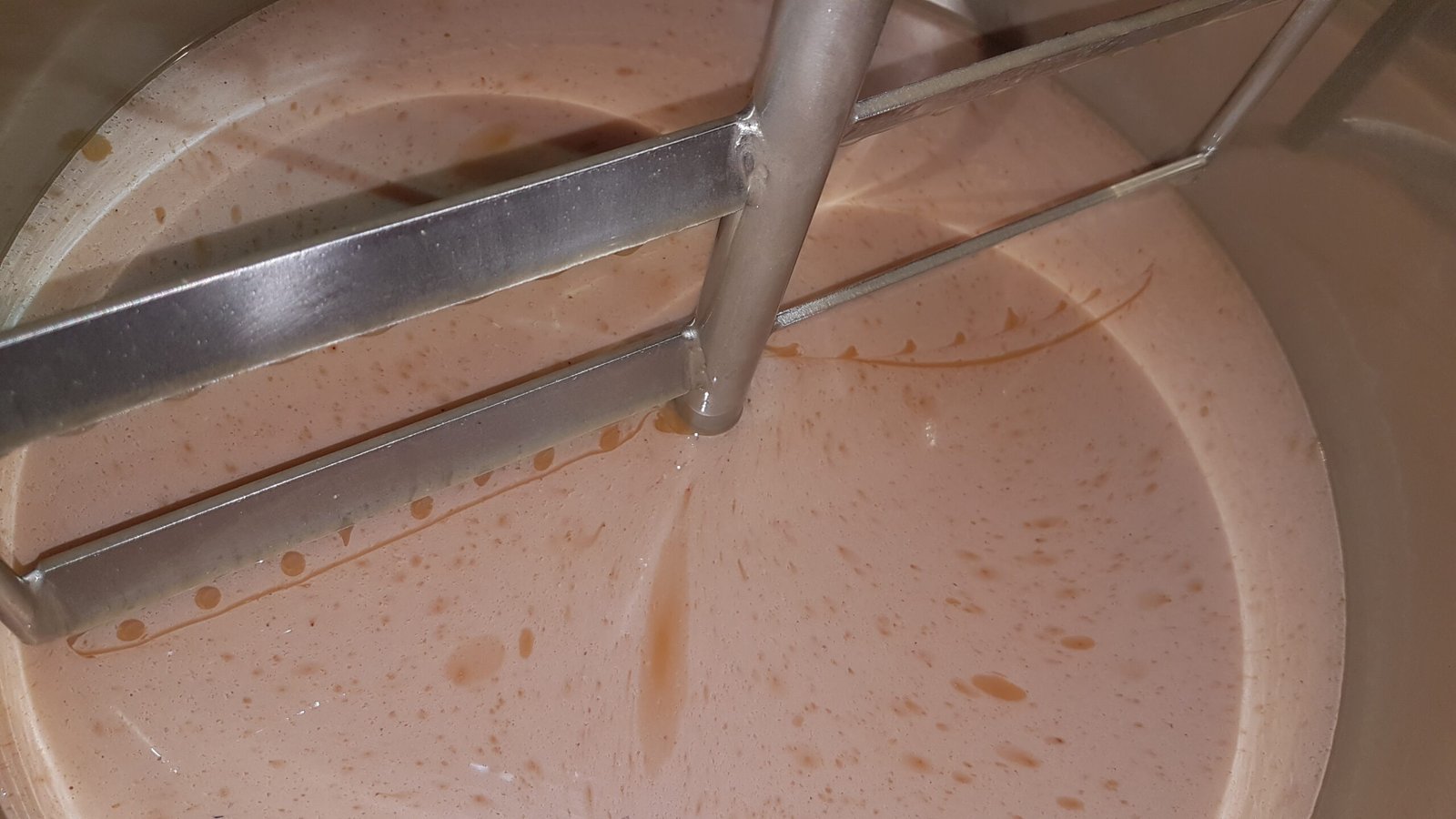
Honey crystallises no matter what — the only question is what size the crystals grow to. Big crystals feel gritty on the tongue. Small ones feel smooth. Creaming is simply the art of making sure the crystals stay small.
You do that by giving the honey a head start: introduce a little honey that’s already set fine and smooth, and the rest of the batch follows its lead as it sets. It stays pure honey throughout, kept cool and moving slowly — you’re just steering a process that was going to happen anyway toward the texture you want. Done slowly and kept cool, it sets silky and spreadable.
The exact method we use, timings and all, is on the creamed honey product page if you want to see how it’s done.
Can you make creamed honey at home?
You can, in principle. The traditional approach is the Dyce method: you take runny raw honey, stir in a spoon of already-smooth creamed honey as a “seed” to set the crystal pattern, then keep it cool — around 14°C — and let it firm up over a week or two. No heat, no additives, just patience.
The catch is getting it right. A good creamed honey has a fine, even, silky crystal all the way through — and that’s the hard part. Too warm and it sets coarse and grainy; rush the stir and you fold in air bubbles that rise to a foam line; skimp on the seed and it never sets smooth. Getting a consistently velvety result takes the seed honey stirred through evenly and held at a steady cool temperature for days, which is more fuss than most kitchens are set up for.
Which is the honest case for buying it done properly. We cream ours slowly the traditional way, kept cool and unheated throughout, until the set is fine and smooth every time — the same raw honey, without the guesswork. Have a look at ours.
Creamed honey vs raw honey: which should you buy?
They’re the same honey, so it comes down to how you’ll use it.
- Runny raw honey — for tea, drizzling, cooking, anything where you want it to pour.
- Creamed honey — for toast, crumpets, sandwiches, or straight off the spoon. It spreads clean and stays on the knife.
Some people prefer creamed simply because the texture is easier to live with — it stays smooth and spreadable in the cupboard, already set the way it’s meant to be. It’s the same raw honey either way, so it keeps the same enzymes, pollen and character — the choice is purely texture. That also makes it just as good for you as any raw honey: a natural food to enjoy from 12 months of age up.
How to store creamed honey (and does it go off?)
Keep it in a cupboard, at room temperature, out of heat and direct sun — that’s all it needs. Honey itself lasts effectively indefinitely, so creamed honey won’t spoil. The one thing to look after is the texture: that smooth, spreadable set is a fine crystal structure we build slowly, and heat undoes it. A hot kitchen, a sunny windowsill or a warm car will turn the set back to runny. Kept in a cool, dark cupboard it holds beautifully for months — no need to refrigerate.
Ours
We cream our own multifloral raw honey in small batches, hand-bottled in Berwick, from hives we rescued rather than killed. It took second prize at the Pakenham Show in 2025, and our honey is used at Stokehouse St Kilda by Executive Chef Jason Staudt. The full hive-to-jar standard is on our raw honey standard.
You can buy it as creamed honey in 500g and 1kg jars, or browse the full honey range. Every jar funds the next rescue.
Frequently asked questions
What is creamed honey?
Creamed honey is raw honey with its crystallisation controlled so it sets fine and smooth instead of coarse and grainy. It’s the same honey as the runny kind — guided into a spreadable texture, not whipped with air. Kept unheated, it stays every bit as raw as liquid honey.
How is creamed honey made?
By steering the honey’s natural crystallisation toward small crystals. A little already-smooth honey is stirred through the batch as a “seed,” and the rest follows its lead as it sets. Kept cool and moving slowly, it firms into a silky, spreadable set — pure honey throughout, no additives.
Can you make creamed honey at home?
You can, using the Dyce method — seed runny raw honey with a little already-smooth creamed honey, keep it cool around 14°C, and let it set over a week or two. Getting a fine, even, silky set is the tricky part, though: too warm sets it grainy and rushing the stir folds in air. It’s fiddly enough that most people prefer to buy it done properly.
Is creamed honey still raw?
It is when it’s kept unheated, as ours is — below 30°C the whole way through and strained no finer than our runny honey. That keeps the enzymes, trace pollen and character intact. Some supermarket creamed honey is heated to process it, which isn’t raw in any meaningful sense.
Is creamed honey good for you?
It’s the same raw honey as the runny kind, so it keeps the same enzymes, pollen and character — the only difference is texture. It’s a natural food to enjoy, suitable from 12 months of age up (honey of any kind isn’t given to babies under one).
What is creamed honey used for?
Anywhere you’d want honey to spread rather than pour — toast, crumpets, sandwiches, bagels, or straight off the spoon. It stays on the knife and doesn’t drip, which makes it the easy choice for spreading.
Does creamed honey go off?
No — honey keeps effectively indefinitely and creamed honey won’t spoil. Just keep it at room temperature in a cool, dark cupboard: heat from a sunny windowsill or warm car will melt the fine set back to runny, so it’s the texture, not the honey, you’re protecting.