
From a Melbourne beekeeper
Why does honey crystallise?
If your honey has turned thick, grainy or solid, nothing’s wrong with it — the opposite. Crystallising is what real raw honey does. Here’s why it happens, and how to bring it back to runny in a minute.
The short answer
Honey crystallises because it’s a naturally unstable sugar solution. It holds far more sugar than water can normally keep dissolved, so over time some of that sugar — mostly the glucose — comes out of solution and forms tiny crystals. The honey turns from clear and runny to thick, pale and grainy. This is completely natural, and it happens to all real, raw honey eventually.
Far from being a fault, crystallising is one of the clearest signs your honey is the real thing — raw, and not heat-treated or ultra-filtered into staying artificially clear.
Why it happens
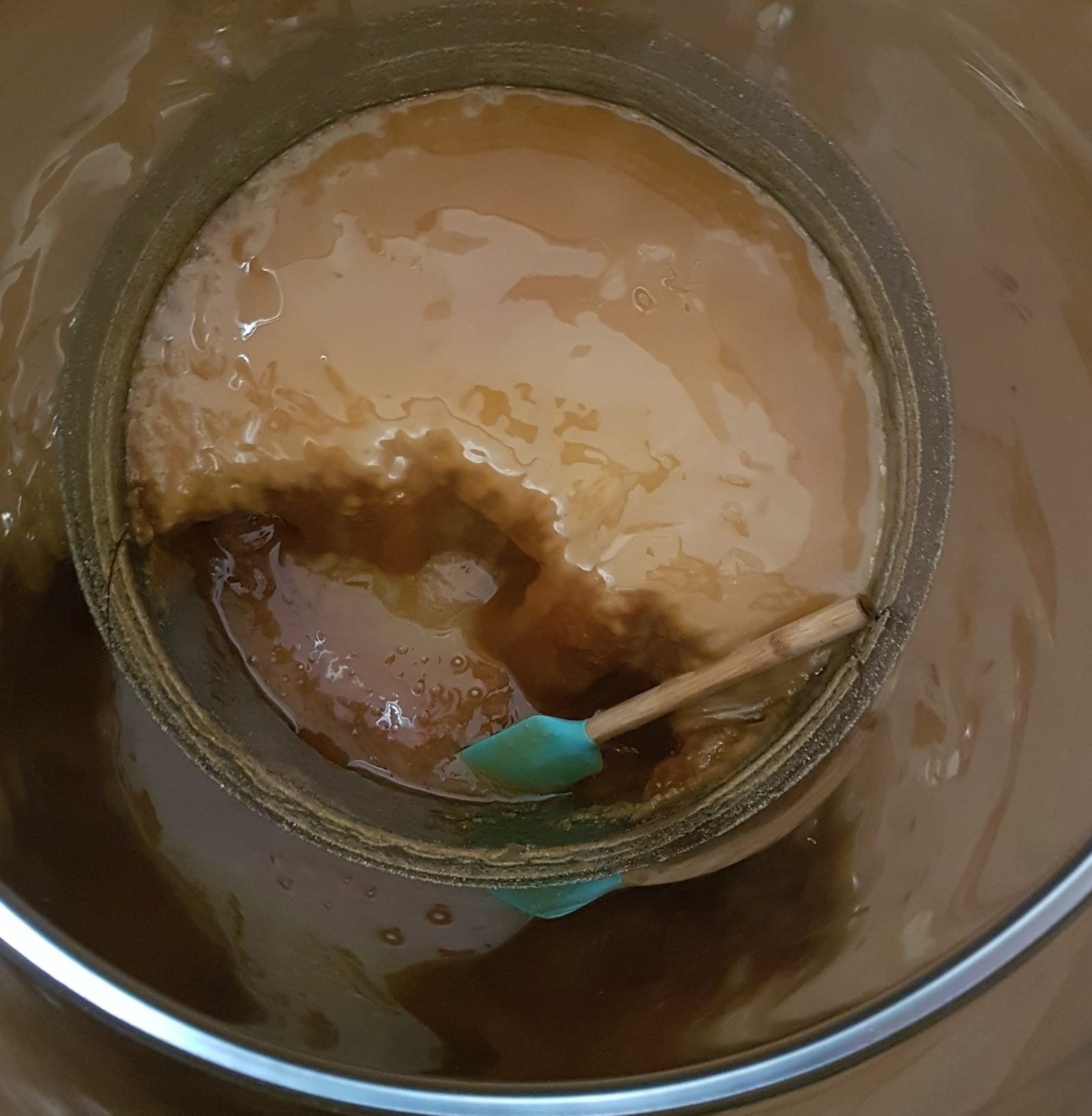
Honey is mostly two sugars — glucose and fructose — dissolved in a very small amount of water. There’s so much sugar packed into so little water that the solution is naturally over-saturated: it’s holding more than it comfortably can. Sooner or later, some of that sugar settles out of solution and locks into crystals. Glucose is the one that crystallises; fructose stays liquid.
That’s why the speed of crystallising comes down to the flowers. Honey from a nectar source high in glucose sets fast — sometimes within weeks. Honey higher in fructose stays runny for months. It’s the same reason every batch of our honey behaves a little differently: each is single-origin — bottled from one apiary, never blended — so each carries the sugar balance of whatever was in flower around that site when the bees made it.
Crystallised honey is a good sign
Here’s the part worth knowing. A lot of supermarket honey never crystallises — it stays perfectly clear and runny on the shelf for years. That’s not because it’s better; it’s because it’s been heated and fine-filtered until the tiny particles of pollen and wax that crystals form around have been stripped out, and the honey pasteurised to hold it clear.
Raw honey keeps all of that in — the pollen, the trace elements, the character — which is exactly why it crystallises. So when your honey sets, it’s telling you it’s genuine: raw, unheated, and full of everything real honey is meant to have. It’s a feature, not a flaw. The full detail of how we keep ours that way is on our raw honey standard.
How to make crystallised honey runny again
Easy, and you lose nothing doing it. Gentle warmth dissolves the crystals straight back into liquid:
- Stand the jar in a bowl of warm water — warm to the touch, not boiling — and leave it for a while, stirring now and then. The crystals melt back in.
- For a bigger or firmer set, change the water for fresh warm water once it cools, and give it time. There’s no rush.
- That’s all it needs. Warm honey goes clear and runny again, exactly as it was.
Keep it gentle. Warm, never hot — and never the microwave. Real heat drives off the delicate aromatics and enzymes that make raw honey worth having, the very things crystallising proves are still in there. Warm it slowly and you keep every bit of it. It’s the same principle behind a good honey water: warmth keeps honey at its best, heat doesn’t.
Or leave it set — and enjoy it that way
You don’t have to melt it at all. Set honey spreads beautifully on toast without dripping off, and many people prefer it that way. If the set is a little coarse or grainy for your liking, that’s just the crystals having grown large. Honey that’s had its crystals kept deliberately fine and smooth is creamed honey — the same raw honey, guided into a silky, spreadable set on purpose.
So a crystallised jar gives you three good options: warm it back to runny, spread it as it is, or enjoy that it proves you’re eating the real thing.
How to slow it down
If you’d rather your honey stayed runny longer, storage helps:
- Keep it at room temperature, in the cupboard. Around 20–25°C is where honey stays liquid longest.
- Don’t refrigerate it. The cold of a fridge is the ideal temperature for crystals to form — it speeds setting up, not down.
- Keep the lid on. Honey draws in moisture from the air, and stray water encourages crystals to start.
Even then, good raw honey will set in the end — and now you know that’s exactly what it should do.
Every jar we sell is raw, cold-extracted and bottled from a single apiary of bees we rescued across South East Melbourne — so yes, it will crystallise, and that’s the point. Every jar funds the next bee rescue.
Frequently asked questions
Why does honey crystallise?
Because honey is an over-saturated sugar solution — it holds more sugar than the small amount of water in it can keep dissolved. Over time some of the glucose settles out and forms crystals, turning the honey thick and grainy. It’s natural, and it happens to all real raw honey.
Is crystallised honey still good to eat?
Yes, completely. Crystallising changes only the texture, not the quality — the honey is exactly as good as it was, and set honey keeps just as well. In fact it’s a sign the honey is genuine raw honey rather than heat-treated.
Does crystallising mean honey has gone off?
No. Honey doesn’t spoil — it keeps effectively indefinitely. Crystallising is just the natural sugars setting into a solid form, not a sign of age or spoilage.
How do I make crystallised honey liquid again?
Stand the jar in a bowl of warm (not boiling) water for a while, stirring occasionally, until the crystals dissolve. Keep it gentle and never microwave it — strong heat drives off the enzymes and aromatics that make raw honey worth having.
Why does some honey crystallise faster than others?
It comes down to the flowers. Honey high in glucose sets quickly; honey higher in fructose stays runny longer. Because each batch comes from a single apiary, it carries the sugar balance of whatever the bees were foraging around that site.
Should I keep honey in the fridge to stop it crystallising?
No — the fridge actually speeds crystallising up, because cold is the ideal temperature for crystals to form. Keep honey at room temperature in the cupboard with the lid on to stay runny longest.