
From a Melbourne beekeeper
Can you eat honeycomb?
Yes — all of it, wax included. I cut comb every season, and this is what I tell people who’ve never eaten it before.
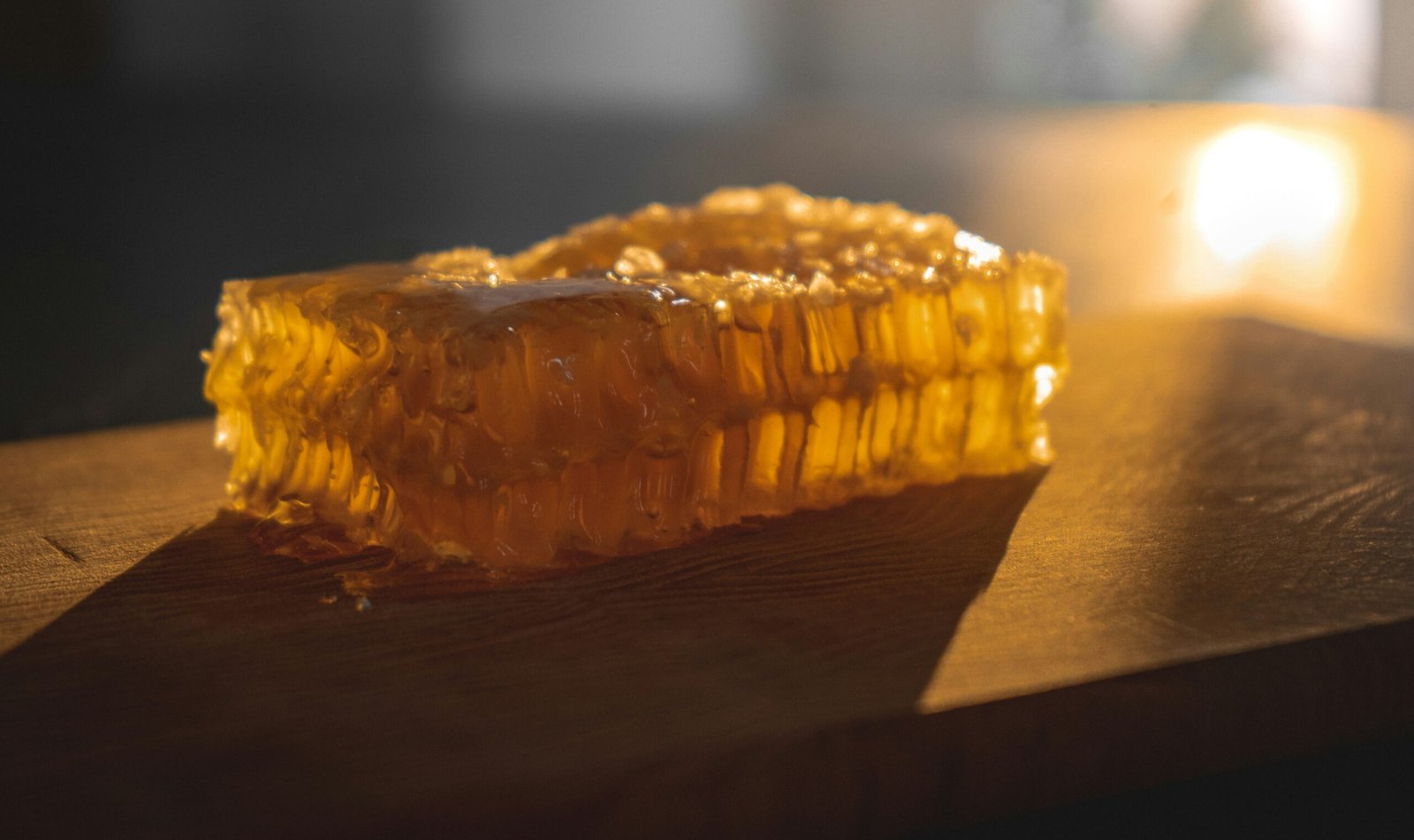
Is honeycomb edible?
Honeycomb — often written as two words, honey comb — is two things: honey, and the beeswax the bees built to hold it. Both are food. People have eaten comb for as long as people have taken honey from bees — extracting honey into jars is the recent invention, not the other way round.
Comb is ready exactly as it comes. Cut a piece and eat it — wax and all.
Can you eat honeycomb wax?
Yes, it’s edible. Beeswax is an approved food ingredient, and it passes straight through you. You can eat the wax in honeycomb without giving it a second thought. It’s the same wax the bees draw to seal their honey — the beeswax we render into candles and blocks.
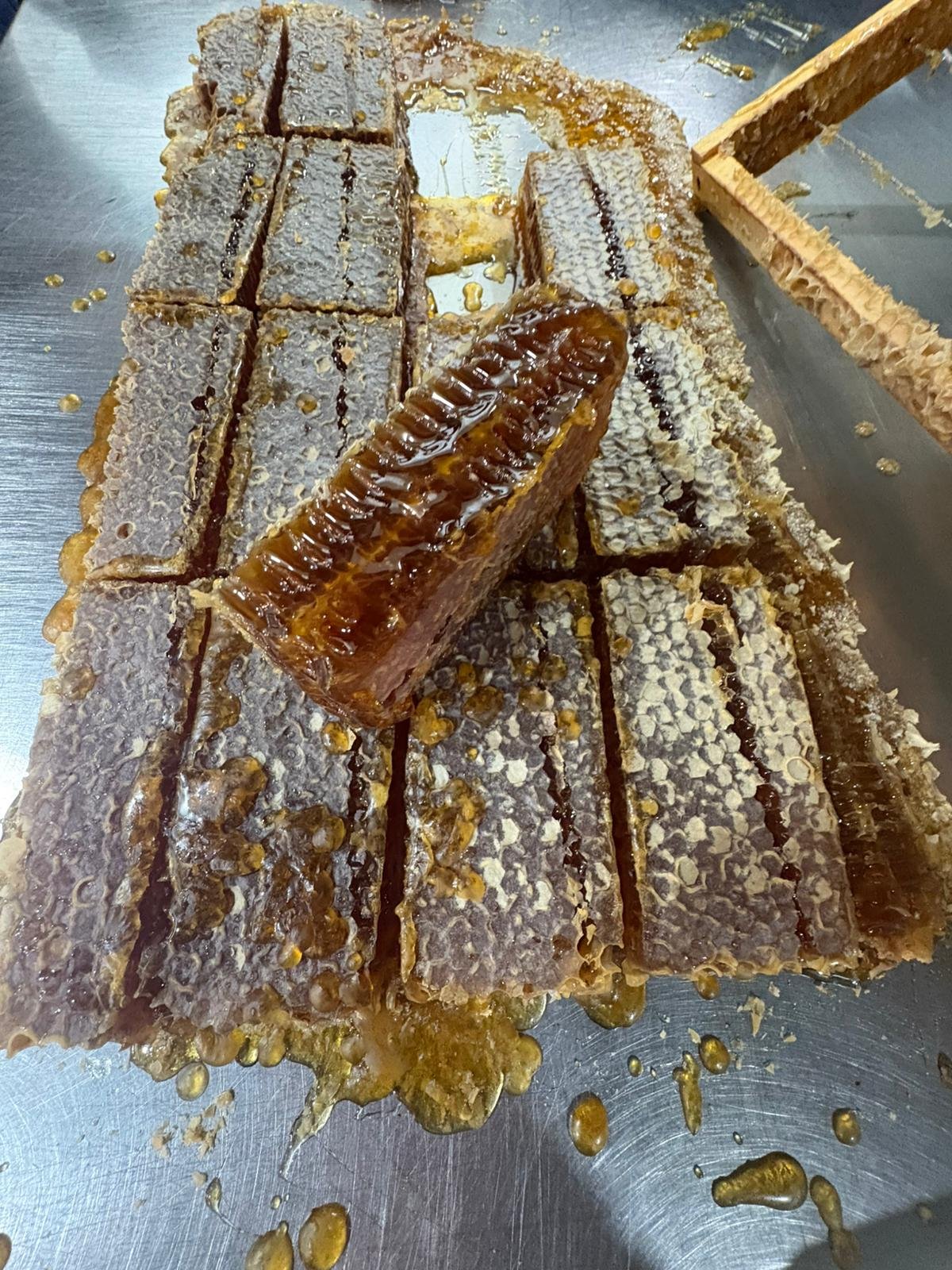
What people actually mean when they ask this is: will I be left chewing a lump of candle? That depends entirely on the comb. Thick, heavily capped comb from an old frame does turn to gum, and most people give up and spit it out. Comb that’s freshly drawn and thin-capped gives way in the mouth and mostly melts. It’s the single biggest difference between comb worth eating and comb that isn’t, and it’s why our raw honeycomb is cut only from our best-presenting frames.
Either way, swallowing the beeswax is fine. Setting it aside is also fine. Nobody’s watching.
How to eat honeycomb
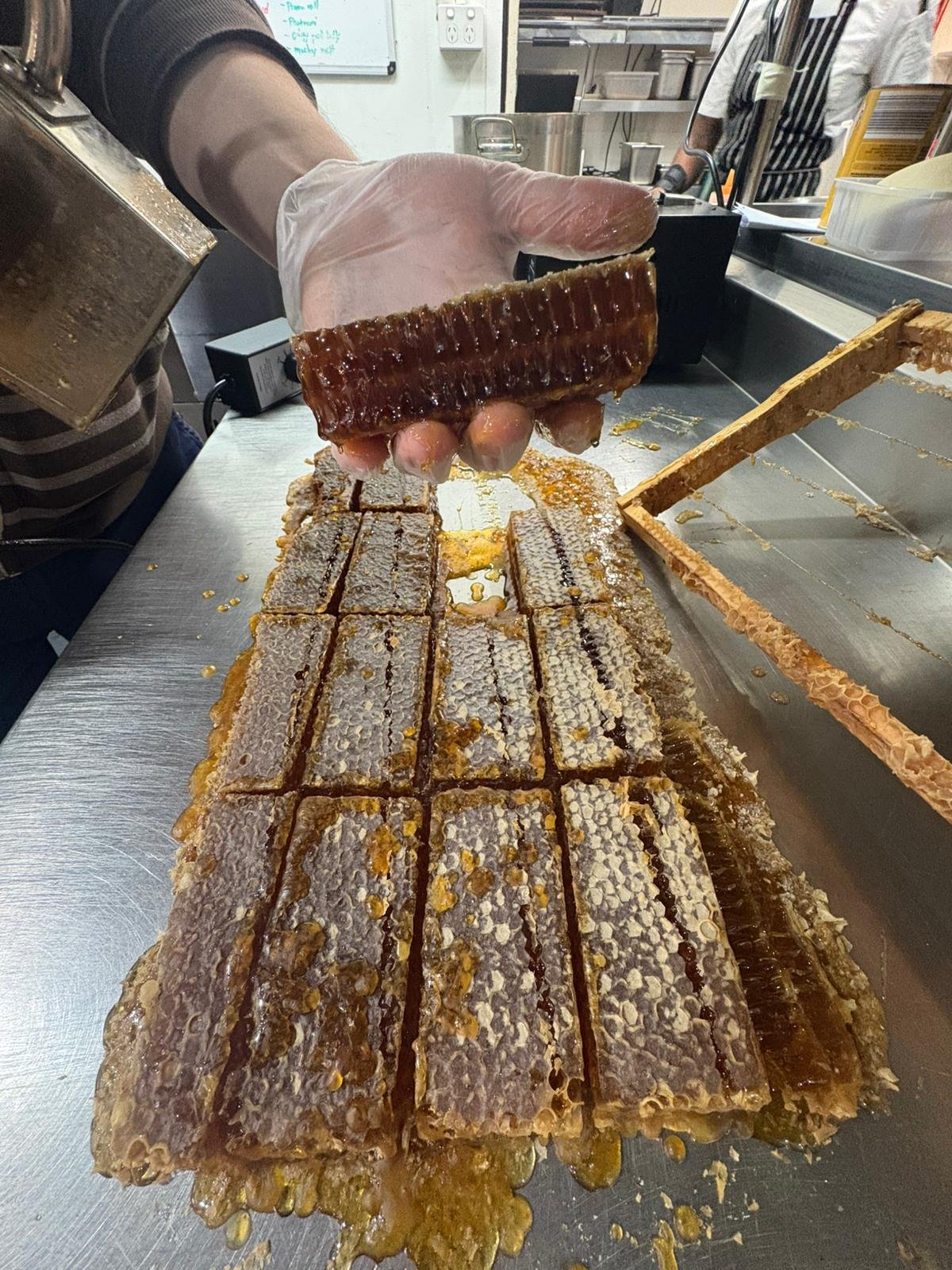
Warm the knife first — run it under a hot tap and dry it. Cold steel drags and tears the cells; a warm blade goes through clean.
- On its own. A piece the size of a matchbox. Chew slowly and let the honey come out first.
- On a cheese board. Anything hard and salty — aged cheddar, pecorino, a washed rind. Put the comb on whole and let people cut their own.
- On toast. Warm the bread first, then lay the comb on and let it collapse into the surface.
- With yoghurt or porridge. Cut it small so it distributes.
- On a roast. Chefs use it at the end, off the heat, so it melts without cooking.
That’s most of what to do with honeycomb, but one thing surprises people: there’ll be loose honey pooled in the container. Cut comb always releases some — that’s honey that was in the cells, not a fault. Spoon it over the top.
What does honeycomb taste like?
Like the honey in it, but arriving differently. In a jar the honey hits all at once. In the comb it’s released as the beeswax breaks down, so it comes in stages — and the wax itself carries a faint, clean scent that you lose completely in extracted honey.
Ours is multifloral, from hives across South East Melbourne, so it changes with the season and the site. Comb cut in spring tastes nothing like comb cut in late summer.
How to store honeycomb, and how long it lasts
Sealed container, room temperature, out of direct sun. Kept that way it holds its texture beautifully for months.
Keep it out of the fridge. Comb is at its best at room temperature, where the wax stays soft and the honey stays loose in the cells — the texture you bought it for. (Cold sets the honey hard around brittle wax.) Honey keeps indefinitely, so comb sits happily on the shelf for months; the honey in the cells may set to fine crystals over time, which is simply raw honey doing what raw honey does.
Is honeycomb good for you?
I’m a beekeeper, not a nutritionist, so I’ll tell you what’s in it rather than what it’ll do for you.
It’s honey and beeswax, exactly as the bees made it. Because comb is eaten just as it comes off the frame — cold, whole, untouched by extractor or filter — the enzymes the bees put into the honey stay in it: invertase, diastase, glucose oxidase. Heat degrades them. Fine-filtering strips the pollen out with them. Comb goes through neither. The trace pollen, the enzymes, the aromatics: whatever the bees sealed into those cells is still sitting there when you cut it open.
What I’ll stand behind is what’s in it and what was never done to it. And like all honey, it should not be given to infants under 12 months — a standard food safety precaution, unrelated to how the honey was produced.
Two quick ones
Is honeycomb gluten free? Yes — it’s just honey and beeswax, both naturally gluten free.
Can dogs eat honeycomb? A small piece won’t hurt a healthy adult dog, but the beeswax isn’t digestible and dogs don’t handle sweet things the way we do, so it’s a rare treat at most. Check with your vet if your dog has any health condition — particularly diabetes. Puppies, like infants, shouldn’t have honey at all.
Where ours comes from
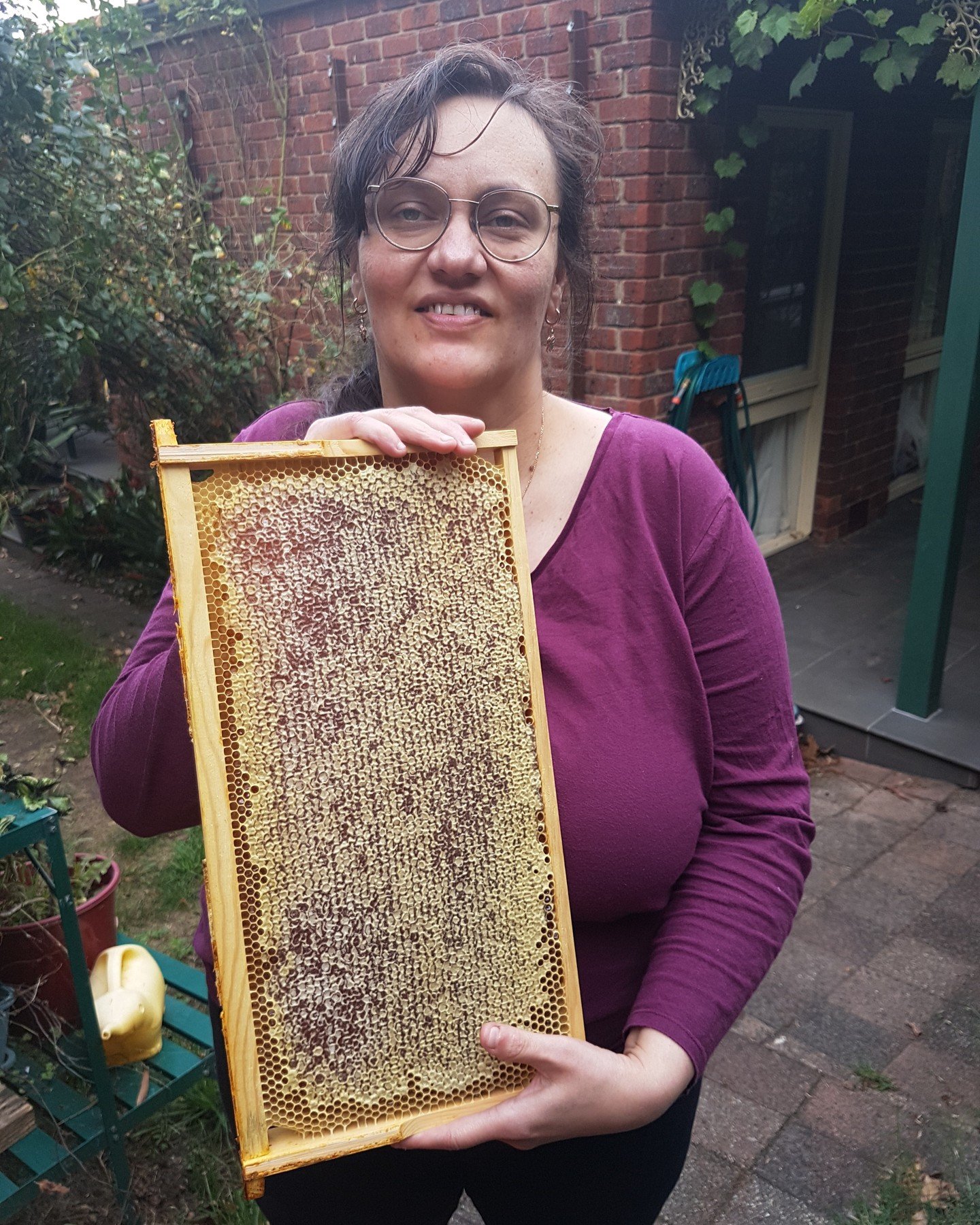
Every frame came from a colony we rescued rather than killed — out of a wall, a roof, a chimney or a tree, and into a hive. The hives are stationary and chemical-free, at sites across South East Melbourne. The full hive-to-comb detail is on our raw honey standard.
You can buy it as raw honeycomb — cut fresh from 100g, or a full frame exactly as it came off the hive. Every purchase funds the next rescue.