
From a Melbourne beekeeper
Beeswax
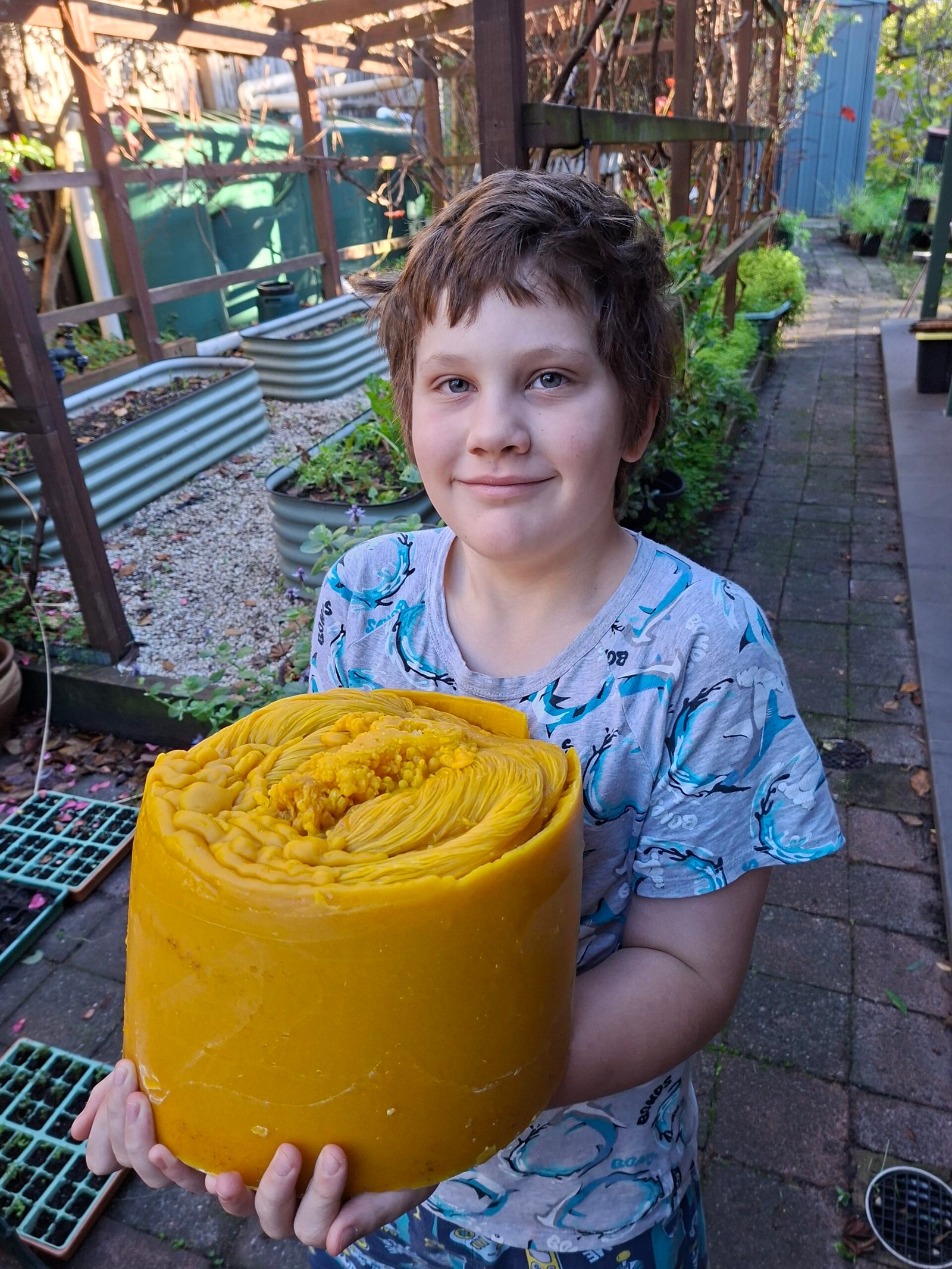
Pure cappings wax — the fresh wax the bees draw to seal their honey. We press it, then melt and filter it at least three times, and set it into blocks. Here’s what it is and what it’s for.
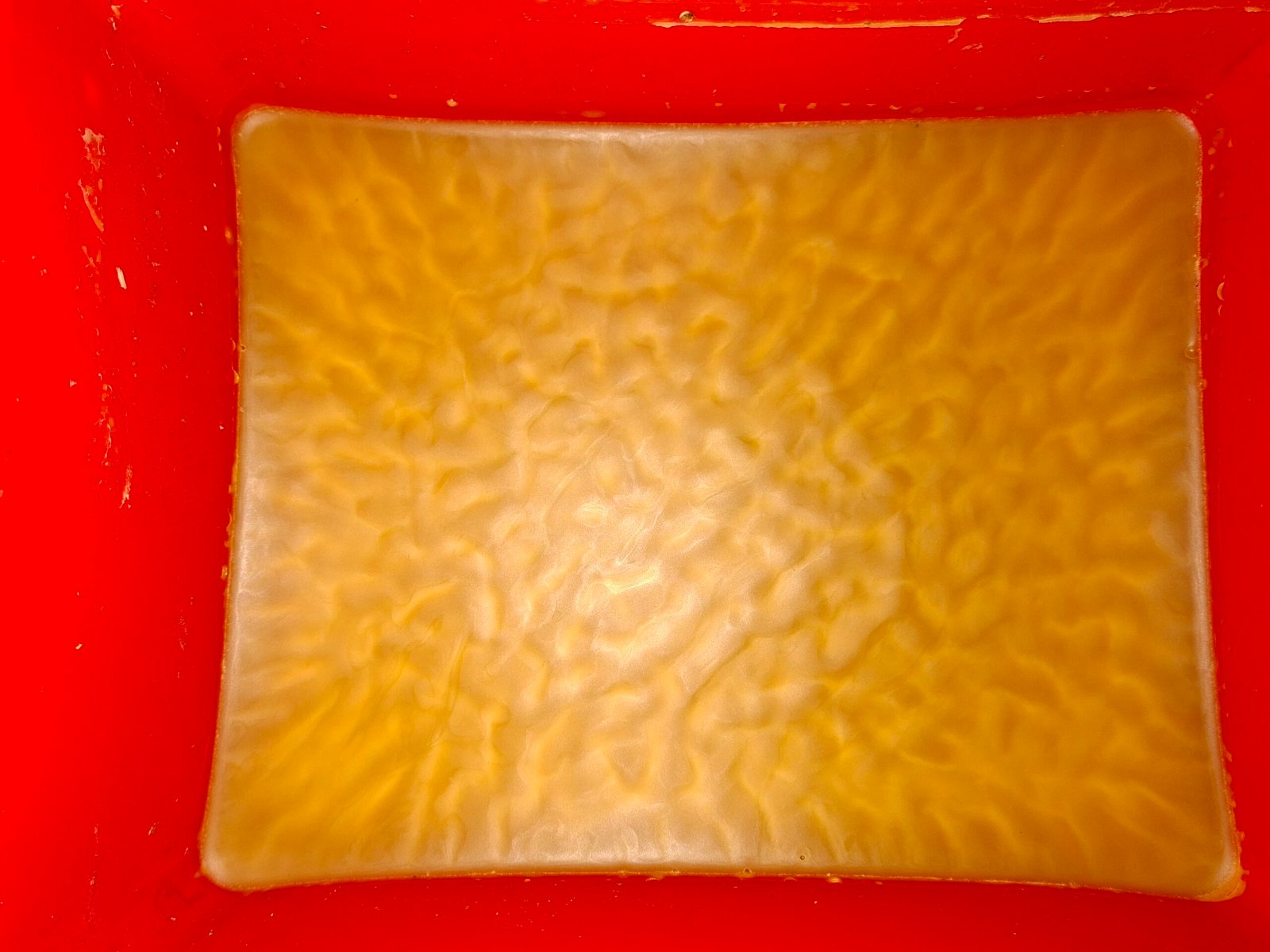
What beeswax is
Beeswax is made by the bees themselves. Worker bees produce it in glands under their abdomen and draw it into the honeycomb — the six-sided cells they build to raise brood and store honey. When a cell of honey is ripe, they seal it with a fresh, pale cap of wax. Those caps are the finest wax in the hive, and they’re what we make ours from. That wax is food, too — it’s why you can eat honeycomb whole, cap and all.
Ours is cappings wax only — not old brood comb that’s held years of use, but the clean, fresh wax the bees drew this season to close their honey. It’s why the colour runs gold rather than dark, and why it smells faintly of honey when it burns or warms in your hands. Wax carries the scent of the hive it came from.
How we make it
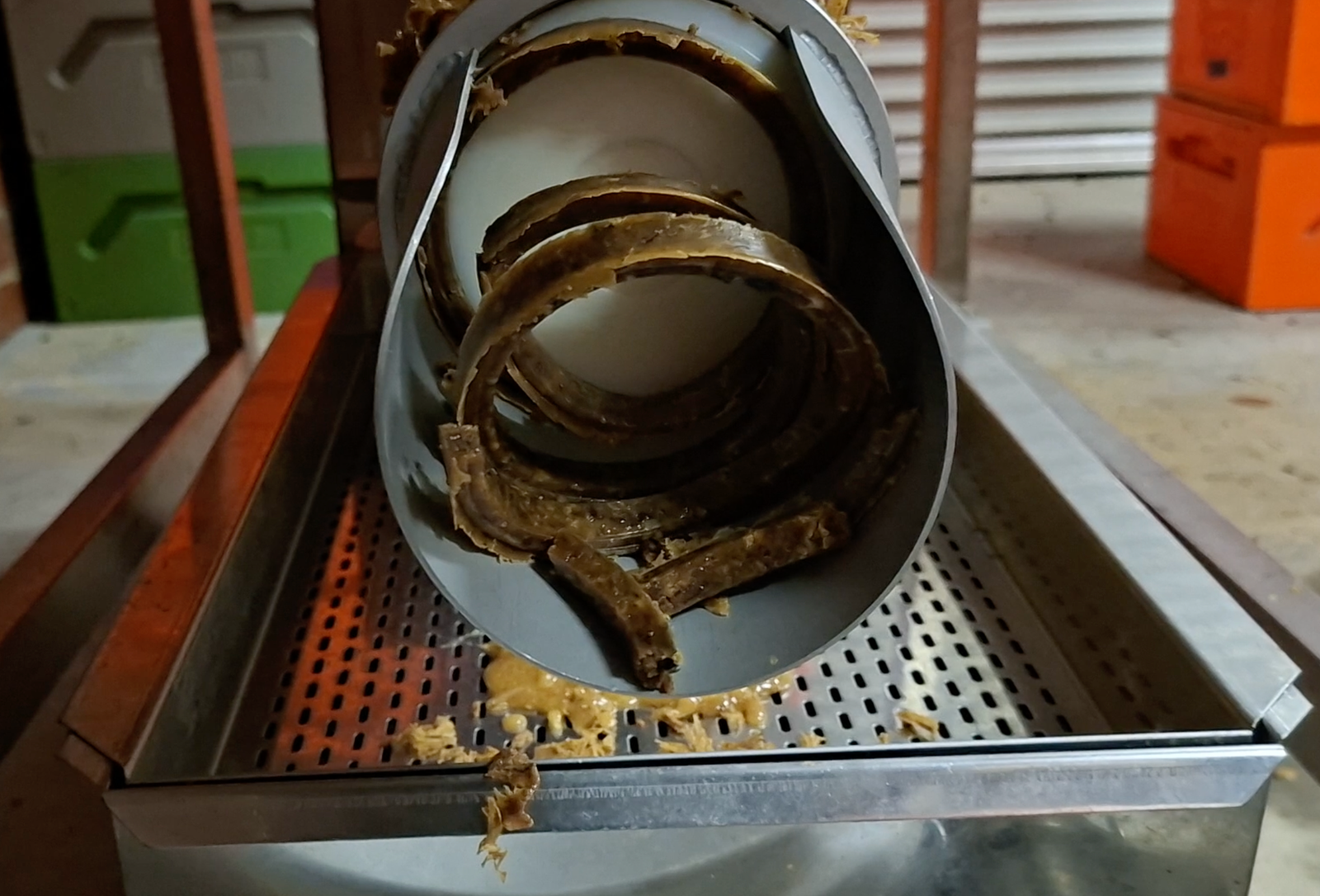
It starts at extraction. When we uncap the frames, the cappings drop into a hopper that feeds a wax press. The press does two jobs at once: it squeezes the honey out of the cappings, and it pushes the wax out separately.
- The honey is saved. It collects in the tank at the base of the press, then gets tipped through a 400-micron sieve and kept for use. Nothing pressed out of those caps is wasted.
- The wax comes out the tip of the press — raw, with a trace of honey still in it.
- Then it’s melted and filtered, again and again. We melt the raw wax in a double boiler, filter it, and let it set — then re-melt and filter it again. That’s at least three passes, sometimes four or five, however many it takes until the wax is completely clean. Each pass runs through a metal sieve first to catch the coarse bits, then fine muslin to take out everything smaller. What’s left is pure wax and nothing else.
- Set into blocks for later use — candles, wraps, polish, or sold as blocks to make your own.
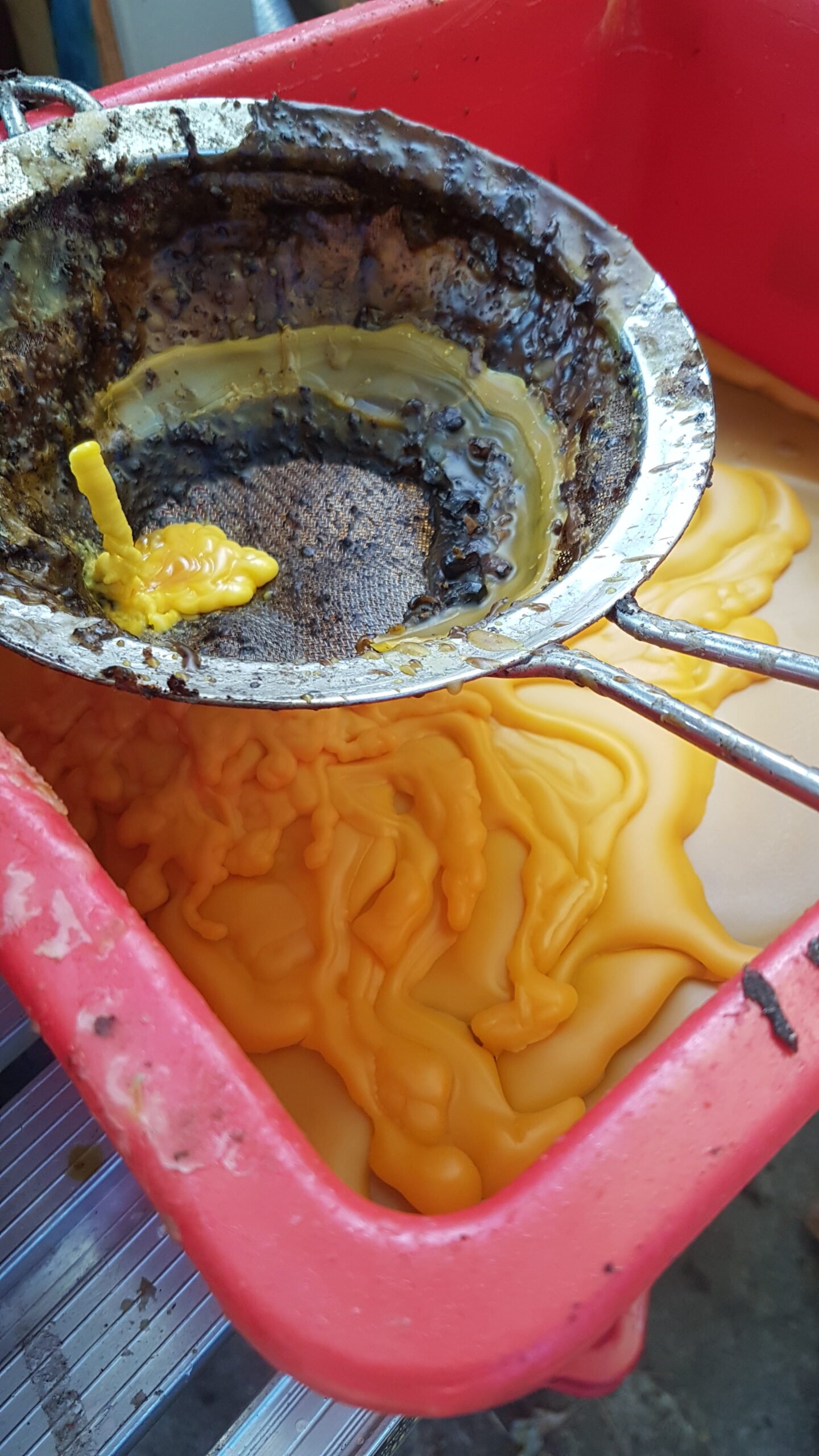
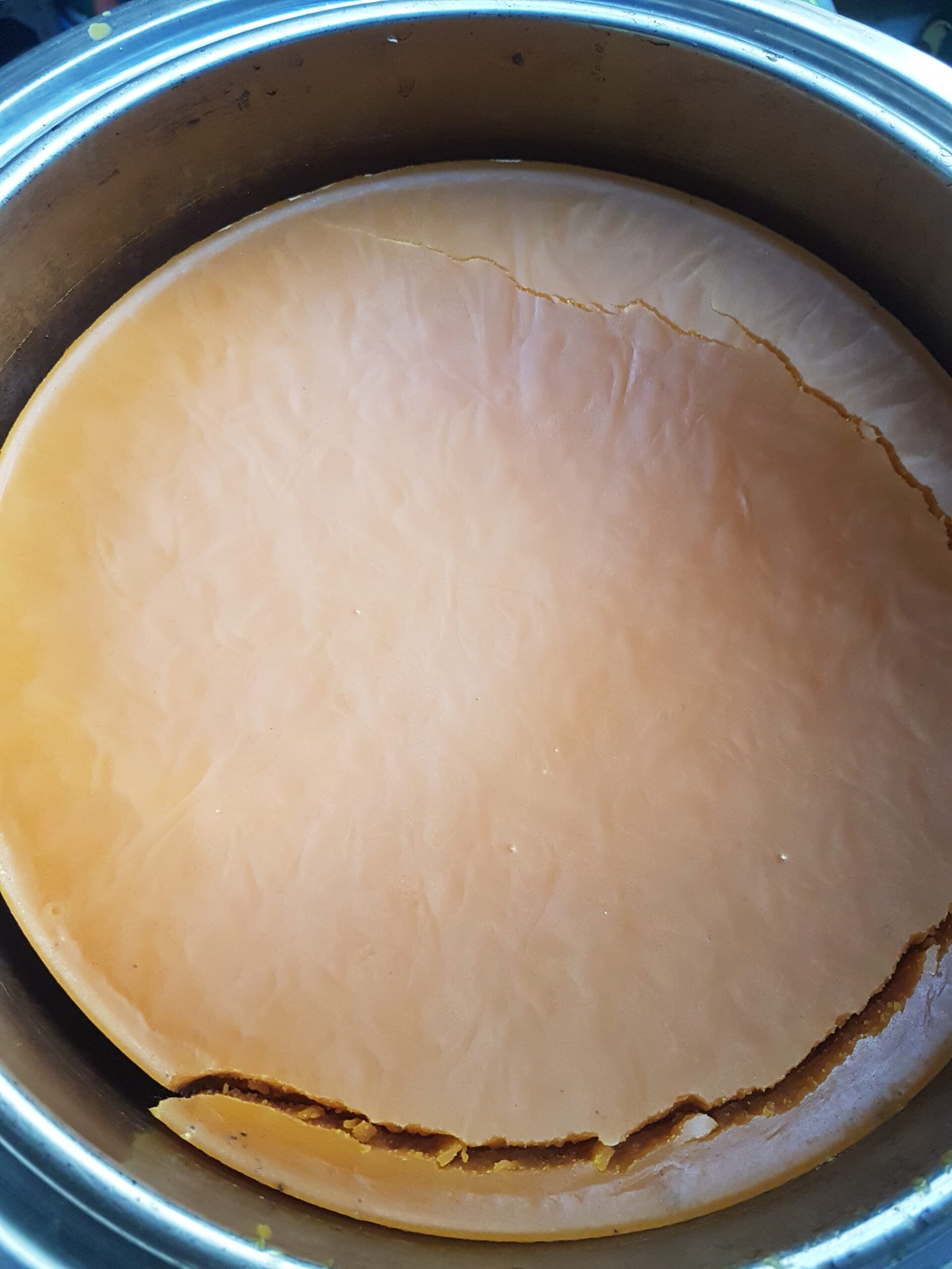
A double boiler matters here. Wax never touches direct heat — it melts over water, gently, the same care we take with the honey. And there’s only ever a little of it. How much wax we render depends entirely on the honey flow and what the season gives us to extract, so it comes in small batches, cappings only, whenever the bees have made enough to spare.
What beeswax is used for
Beeswax has been worked for as long as people have kept bees. A block of it does more jobs than almost anything else in the kitchen or the workshop.
- Candles. The classic use, and still the best. Beeswax burns with a warm, bright, natural light — see our beeswax candles.
- Wood finishing. Rubbed into timber — on its own or warmed with a little oil — it feeds the grain and leaves a soft, low sheen. Furniture, chopping boards, wooden spoons, tool handles.
- Leatherwork. Beeswax conditions and waterproofs leather, and it’s what you run along waxed thread for hand-stitching. Boots, bags, saddlery, canvas.
- The kitchen. Food-safe and food-grade — it’s used to season and seal wooden boards and to make reusable food wraps.
- Skin balms and craft. Beeswax is the base of countless balms, salves and cosmetics, and it’s a favourite for casting, batik, and modelling.
If you want the raw material to work with yourself, our pure beeswax hexagons are small blocks (12–17g each) — the right size for polish, waxed thread, small balms and DIY. Larger 1 lb blocks are coming for bigger jobs.
Beeswax vs paraffin
Most candles on a supermarket shelf aren’t beeswax. They’re paraffin — a by-product of refining crude oil, bleached and set into shape. It’s cheap, and it’s why a pillar candle can cost a few dollars. Beeswax is a different thing entirely, made by bees from the flowers they forage.
Here’s how pure beeswax compares:
- It’s a natural product. Beeswax comes from the hive. Paraffin comes from petroleum.
- It burns longer. Beeswax is denser and has a higher melting point, so a beeswax candle burns slower and lasts longer than the same size in paraffin.
- The light is warmer. Beeswax burns with a bright, golden flame that people describe as close to sunlight.
- It drips less. A well-made beeswax candle in still air burns clean and even, with little mess.
- It burns clean. Pure beeswax burns with next to no soot — far cleaner than paraffin — which is why beeswax candles have been used indoors for centuries, from church halls to the kitchen table.
- It smells of honey. That faint natural scent is the wax itself — no fragrance added. Paraffin needs synthetic scent to smell of anything at all.
You can see it in our hand-dipped taper candles and beeswax tea lights — made from the same cappings wax, filtered at least three times, layer by layer.
Why ours is worth it
Every gram of it came from bees we rescued rather than killed — out of a wall, a roof, a tree, and into a hive. The colonies are stationary and chemical-free, at sites across South East Melbourne, and the wax is cappings only, melted and filtered at least three times. The full hive-to-jar detail is on our raw honey standard.
It’s a small harvest and a slow process. That’s the point. Every purchase funds the next rescue.
Common questions about beeswax
What is beeswax made of? It’s made by honeybees, from wax glands under the abdomen of worker bees. They use it to build honeycomb and to cap ripe honey. Ours is made from those caps — the freshest wax in the hive.
Is beeswax food safe? Yes. Beeswax is food-grade and used to season wooden boards, seal preserves, and make reusable food wraps.
What can I use a block of beeswax for? Candles, wood and furniture polish, conditioning and waterproofing leather, waxed thread, food wraps, and skin balms. One block covers most of it.
How should I store beeswax? A block keeps almost indefinitely at room temperature, out of direct heat and sun. Over time it may develop a pale bloom on the surface — that’s natural, and a quick buff or gentle warmth brings the colour back.
Is beeswax better than paraffin? For candles, beeswax burns longer, brighter and cleaner, with a natural honey scent and no petroleum. Paraffin is cheaper because it’s a refined by-product of crude oil.