
From a Melbourne beekeeper
What is unfiltered honey?
Honey the way it comes out of the hive — strained of wax, with all its pollen and character kept in. Here’s how it differs from the filtered honey on most shelves, and why the things people worry about are the signs you want.
Unfiltered honey, plainly
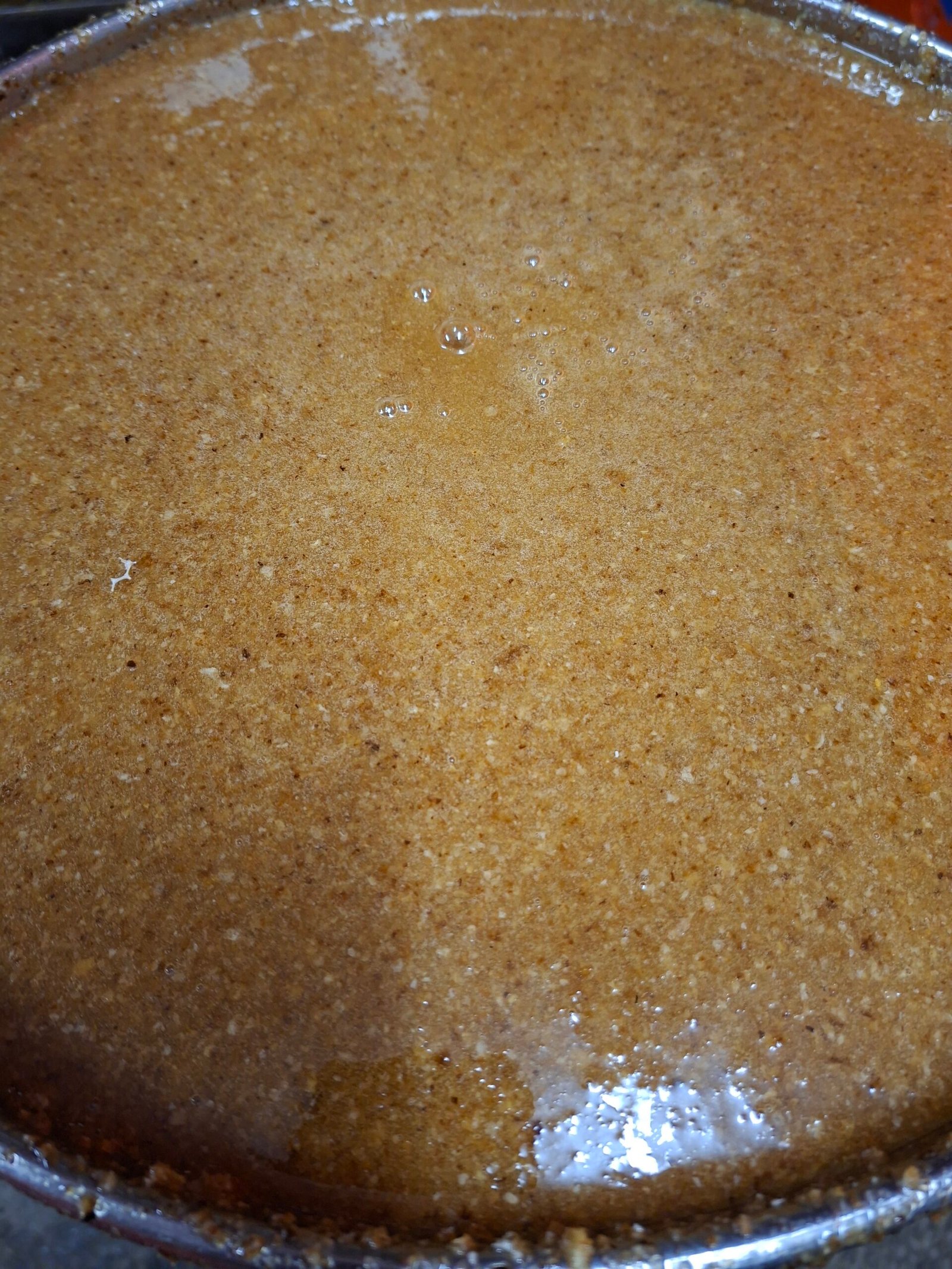
Unfiltered honey is honey that’s been strained to take out the bits of wax and the odd bee leg, and nothing more. It’s passed through a coarse sieve — ours is 400 microns — which catches the debris but lets everything else through: the pollen, the trace propolis, the natural texture.
That “everything else” is the point. Fine filtering, the industrial kind, pushes honey through tight mesh under heat and pressure to strip out the pollen and give a permanently clear jar with a long shelf life. It looks clean. It’s also had the character taken out of it. Unfiltered keeps all of it.
Unfiltered vs filtered honey
The difference isn’t the honey — it’s what’s done to it after the bees make it.
- Filtered honey is forced through fine mesh, usually with heat, to remove pollen and delay crystallising. The result is clear, uniform and shelf-stable — and stripped of the pollen that tells you where it came from.
- Unfiltered honey is only coarse-strained. It keeps its pollen, so it sets and clouds over time, and it varies jar to jar. That variation is the honey being honest about its source.
One note on wording: unfiltered and raw aren’t quite the same thing. Raw means never heated. Unfiltered means never fine-filtered. Honey can be one without the other — ours is both, which is the combination worth looking for.
Is unfiltered honey better for you?
Here’s the honest version, from a beekeeper rather than a health-food label. What filtering removes is mainly the pollen — and with it, the trace enzymes, the fine propolis, and the microscopic record of which flowers the honey came from. Unfiltered honey keeps all of that in the jar, simply because it never went through the process that takes it out.
Whether that makes a measurable difference to your health isn’t something we’ll promise you — the honest answer is that the studies are modest and we’re beekeepers, not nutritionists. What we can say plainly is what’s true: unfiltered honey is the more complete, less processed version of what the bees actually made. If you’re choosing honey for what’s in it rather than how clear it looks, that’s the case for unfiltered — and the same case runs through the benefits of raw honey more broadly.
The “problems” that are actually good signs
People new to unfiltered honey sometimes think something’s wrong with it. Usually it’s the opposite.
- It’s gone cloudy or set solid. That’s crystallising, and only honey with its pollen still in it does it readily. Stand the jar in warm water to soften it, and keep it away from the microwave, which harms the raw qualities.
- There are tiny flecks in it. Usually specks of propolis carried through the coarse sieve — harmless, and part of what makes it unfiltered.
- This jar looks different from the last. Different apiary, different season, different flowers. A filtered blend is uniform on purpose; ours carries the character of each batch.
All of these are signs of honey in good, natural condition. Stored sealed and cool, honey keeps effectively forever.
How to use unfiltered honey
Use it exactly as you’d use any good honey — the only thing worth knowing is how to keep what makes it worth buying. It’s lovely straight off the spoon, on toast, through yoghurt, or drizzled over fruit and cheese. And if you want honey in its most untouched form of all, there’s honeycomb: you can eat honeycomb, wax and all.
When you add it to something warm, let the heat come down first: stir it into tea or coffee once it’s drinkable rather than scalding, and add it at the end of cooking rather than the start. Gentle warmth is all it takes to loosen honey — keeping it off high heat is what preserves the raw qualities you paid for. It also makes a lovely honey water, stirred into warm (not boiling) water with a little lemon.
Ours
We strain ours through a 400-micron sieve and stop there — coarse-strained only, kept raw and never heated past hive temperature, packed in glass. It’s cold-extracted from fully capped frames across our rescued, chemical-free hives around South East Melbourne. The full hive-to-jar detail is on our raw honey standard.
You can buy it as raw, unfiltered honey by the apiary, or read about local honey in Melbourne and where to find us. Every jar funds the next rescue.