
Bees · For Kids
Bees for kids
Bees are some of the busiest, cleverest little animals on Earth — and once you know a few things about them, you’ll never look at a flower the same way again. Here’s the good stuff: what bees are, who lives in a beehive, how they make honey, and why they matter so much. Perfect for curious kids, and for the grown-ups reading along.
What is a bee?
A bee is an insect, which means it has six legs, two pairs of wings, and a body in three parts: a head, a middle part called the thorax, and a back part called the abdomen. Bees have two big eyes, two feelers called antennae for smelling and touching, and a special long tongue for sipping sweet nectar out of flowers. Their bodies are covered in tiny hairs — and those hairs are secretly very important, as you’ll see.
There are lots and lots of different kinds of bees — more than 20,000 kinds in the whole world, and over 1,600 kinds just in Australia! Some live together in a big family called a colony — those are honeybees. But most bees are solitary, which means each one lives on its own, like the beautiful shiny blue-banded bee or the fuzzy orange teddy bear bee.
Who lives in a beehive?
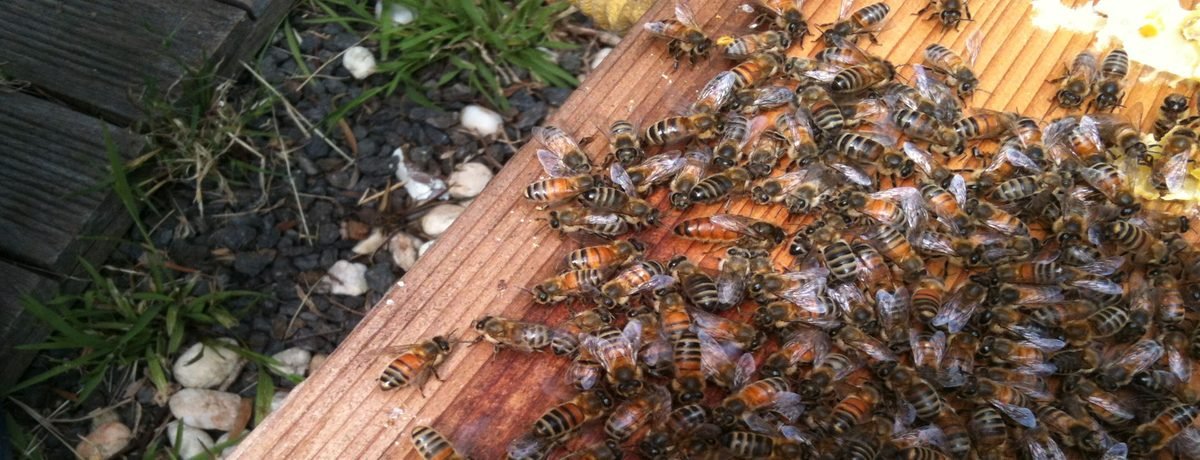
A honeybee hive is like a busy little city, with as many as fifty thousand bees all living together — and everyone has a job to do.
The queen is the mother of the whole hive. There’s only one, and she’s the biggest bee, with a long pointy body. Her job is to lay all the eggs — and she’s amazing at it: she can lay more than a thousand eggs in a single day, more than her own body weight!
The worker bees are all girls, and they do almost everything. When a worker is young she cleans the hive and feeds the babies; when she’s a bit older she builds the honeycomb and guards the door; and when she’s oldest of all she flies out to gather nectar and pollen. So the bee you see on a flower is a girl, and she’s one of the oldest bees in her hive. Busy her whole life!
The drones are the boy bees. They’re bigger and rounder, with great big eyes, and they don’t have a sting. Their job is to help make new queens.
How do bees make honey?
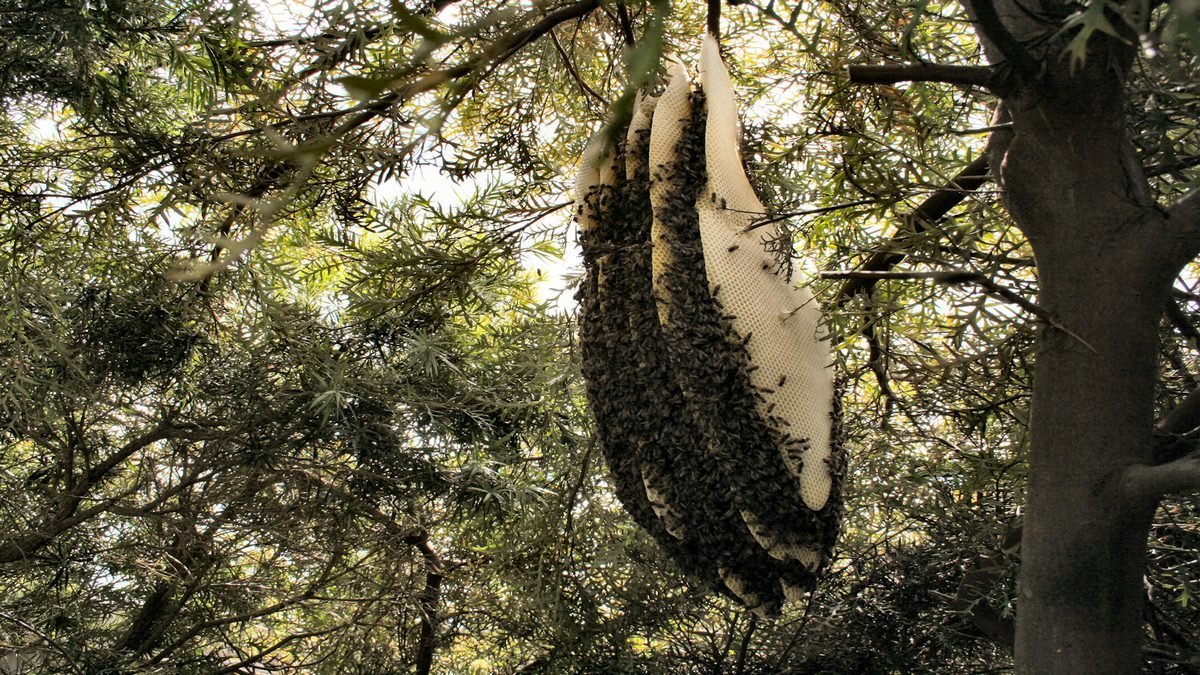
Bees make honey so they have food to eat in winter, when there aren’t many flowers to visit. Here’s how they do it:
First, a worker bee flies to a flower and drinks the sweet nectar, keeping it in a special honey tummy — that’s a second tummy, just for carrying nectar! Back at the hive, she passes it mouth-to-mouth to other bees, who pass it along too, a bit like a game of pass-the-parcel. All that passing, and lots of busy wings fanning like tiny fans, dries the runny nectar out and turns it thick and golden. The bees tuck the finished honey into little six-sided wax cups called honeycomb, and put a wax lid on top to keep it fresh — like tiny jars with lids. That’s honey!
Those six-sided shapes aren’t an accident, either. A shape with six sides is called a hexagon, and it’s the cleverest way to fit lots of cups together with no gaps and using the least wax. Bees have been building perfect hexagons for millions of years — long before people worked out the maths of why they’re so clever.
A single bee makes only a tiny drop of honey in her whole life. So a jar of honey is the work of thousands of bees visiting millions of flowers.
Why bees are so important
Here’s the most amazing thing bees do — and it’s not honey. Remember those tiny hairs all over a bee’s body? When a bee visits a flower to drink nectar, tiny yellow dust called pollen sticks to those hairs. When she flies to the next flower, some of that pollen rubs off — and that’s the magic. Flowers need pollen from other flowers to make seeds and fruit, and they can’t walk over to fetch it. The bees carry it for them, without even meaning to. That’s called pollination.
Lots of the food we love grows because bees pollinated the flowers first — apples, strawberries, watermelon, pumpkins, almonds and so many more. Some people say that about one in every three mouthfuls of the food we eat was helped along by a bee or another pollinator. So bees don’t just make honey; they help grow our dinner!
Do bees really sting?
Bees can sting, but here’s a secret: they really don’t want to. A honeybee only stings to protect her hive if she thinks it’s in danger, and a worker honeybee can only sting once. Most of the bees you meet out on flowers are far too busy working to take any notice of you at all. If you stay calm and don’t wave your arms or try to squash them, bees will almost always just buzz around you and carry on with their day.
And lots of bees can’t really sting you at all. Most of Australia’s native bees, like the blue-banded bee, hardly ever sting, and the little stingless bees can’t sting at all. So the best thing to do if a bee comes near is the calmest thing: stand still, keep your hands down, and watch. You might just see something wonderful.
How you can help bees
Kids can be some of the best bee helpers of all. Here are four easy things you can do:
Plant some flowers. Bees love lavender, borage, daisies and lots of purple and blue flowers. Even one pot on a balcony gives bees a meal.
Put out a bee bath. Bees get thirsty too! A shallow dish of water with some pebbles or sticks poking out gives them a safe place to land and have a drink without falling in.
Leave a wild corner. Ask a grown-up if you can leave one little patch of the garden messy — some bare dirt, a few hollow twigs. That’s where lots of native bees like to make their nests.
Be a bee friend. Don’t squash them, tell your friends how amazing they are, and if you ever find a big bunch of bees, tell a grown-up they can be moved to a safe new home instead of being hurt.
Want to learn more? Meet Australia’s amazing native bees →, say hello to the shiny blue-banded bee →, or find out how to turn your garden into a bee paradise →.