
Bees · How to Help
How to make a bee-friendly garden
A garden planted for bees is one of the most useful things you can do for the natural world — and it’s easier than most people think. You don’t need acreage or a hive. A balcony of the right pots, a nature strip left a little wild, or a corner of the backyard planted for a long flowering season all help, and they help every kind of bee at once: the honeybees, and the 1,600 species of native bee that most gardens never notice. The principles are simple: feed them across the whole year, give them water and somewhere to nest, welcome all the bees, and put the sprays away.
Plant for a long flowering season
The single most valuable thing a garden can offer is something in flower for as much of the year as possible. Bees don’t hibernate neatly — they need forage across the seasons, and the hungriest gaps come in late winter and early spring, when colonies are building again but little is yet in bloom. A garden planted so that as one thing finishes another opens carries bees through those gaps. Aim for a succession, not a single summer flush.
Diversity matters as much as duration. Different bees have different tongue lengths and body sizes, and suit different flower shapes: open, shallow flowers feed short-tongued bees and the tiny natives, while deeper, tubular flowers suit the long-tongued ones. A garden with ten kinds of flower feeds far more of them than a lawn with one, and a mix of shapes and colours spreads the welcome widest.
The best plants for bees in Australia
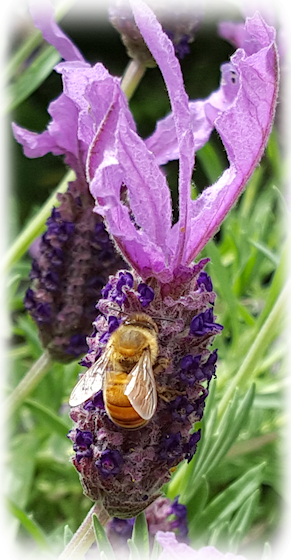
You don’t have to choose between natives and exotics — the best bee gardens grow both. Australian natives suit native bees especially, while many introduced herbs and flowers are honeybee favourites, and most plants feed both.
Australian natives: grevillea, banksia, bottlebrush (callistemon), tea tree (leptospermum), native rosemary (westringia), Dianella (blue flax lily), and native daisies. The blue and purple natives — Dianella and native salvias especially — are particular favourites of the blue-banded bee.
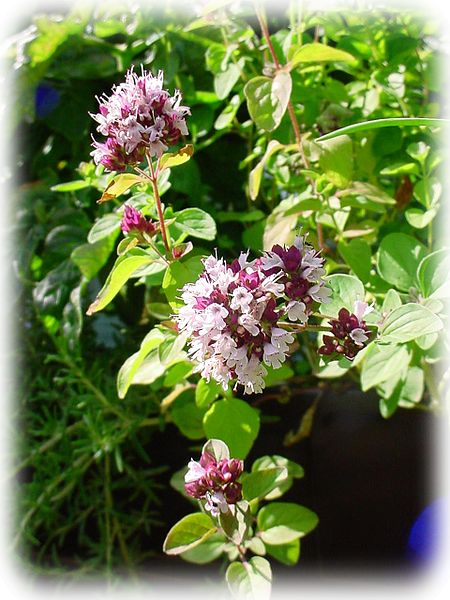
Herbs and exotics bees love: lavender, borage, rosemary, thyme, oregano, sage and the other salvias, phacelia, buckwheat, and sunflowers. One of the easiest wins in any garden is simply to let your herbs flower rather than cutting them back — a bolting basil, a flowering oregano or a rosemary in bloom is a bee magnet, and costs you nothing but restraint.
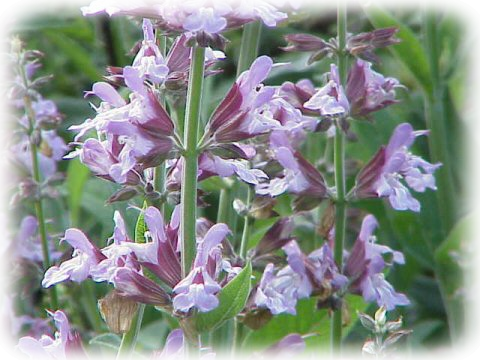
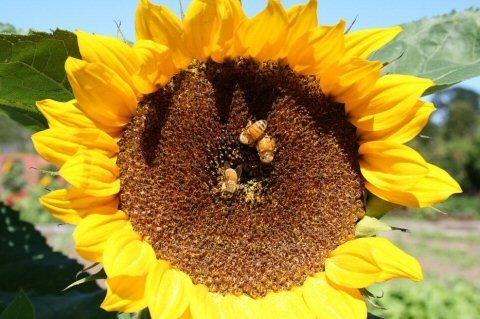
Sage and the salvias deserve a special mention — their tubular blue and purple flowers are exactly what the blue-banded bee is built for, and they flower long and generously. Sunflowers, at the other extreme, offer a broad open landing pad packed with pollen and nectar, and a single head feeds bee after bee for weeks.
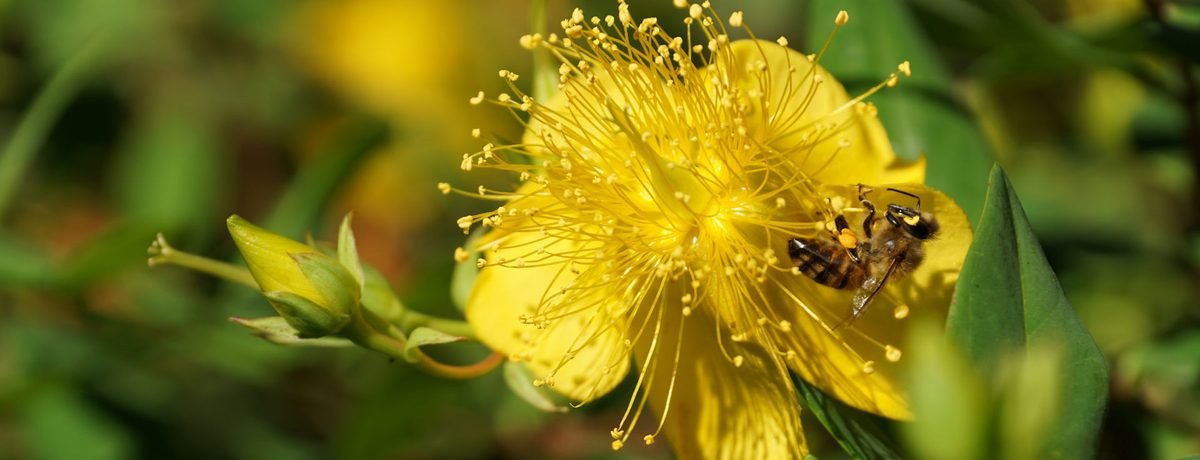
Hypericum (St John’s Wort) is another the bees seek out — its bright yellow flowers carry a dense burst of stamens loaded with pollen, and bees work them busily through summer. Choose a garden variety and keep it contained, as some forms can spread.
A word on borage — and on single flowers
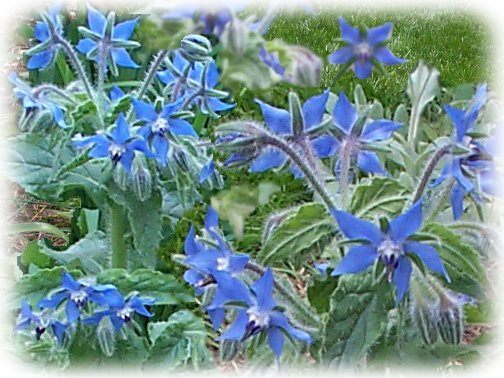
If you plant one thing for bees, plant borage. Its little blue star-flowers are remarkable for how fast they refill with nectar — often within minutes of being emptied — so bees work it hard and return to it all day. It self-seeds happily, flowers for months, and asks almost nothing of the gardener.
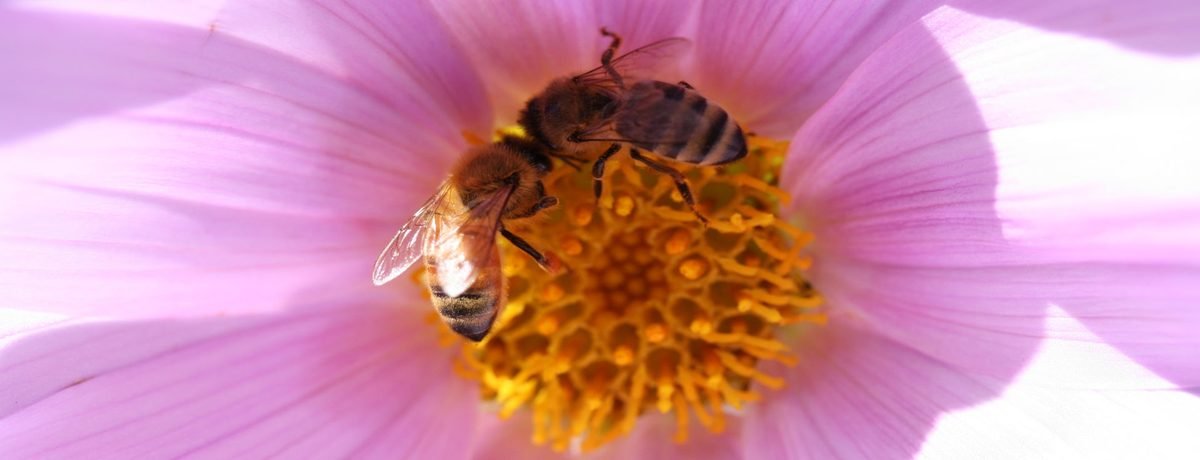
Wherever you can, choose single, open-faced flowers over the frilly double-bred ornamentals. The doubles are bred for show, and in packing in all those extra petals they often lose the pollen and nectar — or bury it so deep a bee can’t reach it. An open single dahlia is a feast; a tight pompom double is a decoration. The bees can tell the difference, and so can you once you start watching which flowers they actually visit.
Grow some natives
Native plants earn a special place, because they feed the native bees that evolved alongside them — and many are tough, drought-hardy and low-maintenance into the bargain. Grevilleas are among the most generous, dripping nectar that feeds bees and honeyeaters alike, and there’s a grevillea for almost every garden size, from ground-covers to tall shrubs. Bottlebrush, banksia and tea tree do the same job. Planting natives is also how you support the specialist bees a garden of exotics alone would miss.
Give them water
Bees need water as much as nectar, especially through a hot Australian summer — they use it to cool the hive and to dilute stored honey to feed the brood. A shallow dish with pebbles, corks or twigs for the bees to land on — so they can drink at the edge without drowning — is all it takes. Keep it topped up and in the same spot; bees learn a reliable water source and return to it faithfully. If you find bees at your pool or the dog’s bowl, don’t shoo them; give them a better, closer option and they’ll switch to it.
Leave some of it wild
Most of Australia’s native bees are solitary, and they nest in exactly the messy corners a tidy garden removes: bare, undisturbed ground for the ground-nesters, sandy or clay banks and soft mortar for the diggers, hollow plant stems and old timber for the leafcutters and resin bees. So one of the kindest things you can do for them is simply less. Leave a patch of bare soil unmulched. Keep a low clay or earthen edge somewhere undisturbed. Let a few hollow stems stand over winter, and don’t clear away every scrap of dead wood. A garden that is perfectly, relentlessly tidy is a garden with nowhere for a native bee to live.
The single biggest favour most gardens can do for bees is to stop poisoning them.
Put the sprays away
Garden pesticides are one of the heaviest pressures on bees, and home spraying is largely unregulated — often applied by people with no idea of the risk to pollinators. The worst offenders are the systemic insecticides — the neonicotinoids such as imidacloprid — which the plant draws up into its own tissues and expresses in its pollen and nectar, delivering the poison straight to the bees that feed there and impairing their navigation, memory and immunity. They’re sold freely in garden centres under many brand names, often in products marketed as routine plant care.
The most impactful thing many gardeners can do is audit what’s in the shed and stop using anything harmful to bees — and above all, never spray anything that is in flower, where bees are actively feeding. There’s an effective, lower-risk alternative for almost every garden pest problem. At BeesFriend we keep our own hives entirely chemical-free, for exactly these reasons.
Beyond your fence
The impact multiplies when gardens join up. A single bee-friendly garden is an island; a street of them is a corridor. Native bees, most of which forage only a few hundred metres from their nest, depend on being able to move between patches of habitat — so supporting bee-friendly plantings in your street, your school and your local parks does more than your own garden alone ever could. And if a swarm or colony turns up where it isn’t wanted, spread the word that it can be relocated rather than killed. The more people in a neighbourhood who know that, the safer its bees.
A good bee garden helps every kind of bee. Meet the native bees you’ll be feeding →, get to know the blue-banded bee →, or — if you’ve found a honeybee swarm rather than a native — see how our rescue works →.