
Why Bees
I was about four years old the first time I understood bees.
There was an old lady in my street in Transylvania who let the calendula grow wild on her nature strip, and the bees came to it every day. I would crouch there and watch them for hours. Somehow I already knew which ones were the drones — the ones I could pick up gently and let go again. Nobody taught me that. I just knew.
I’ve been drawn to living things my whole life — lizards, butterflies, birds, and always the bees. I never grew out of it. I grew into it.
Bees do an enormous amount for us. They pollinate the food we eat. They hold up a whole system most people never stop to think about. And they have a hard life — poisoned, losing their homes, and when they turn up where they’re not wanted, usually killed, when almost every time they could have been saved instead.
The thing about bees is they can’t speak for themselves. So someone has to. That, in the simplest terms, is why BeesFriend exists.
The man who believed in me
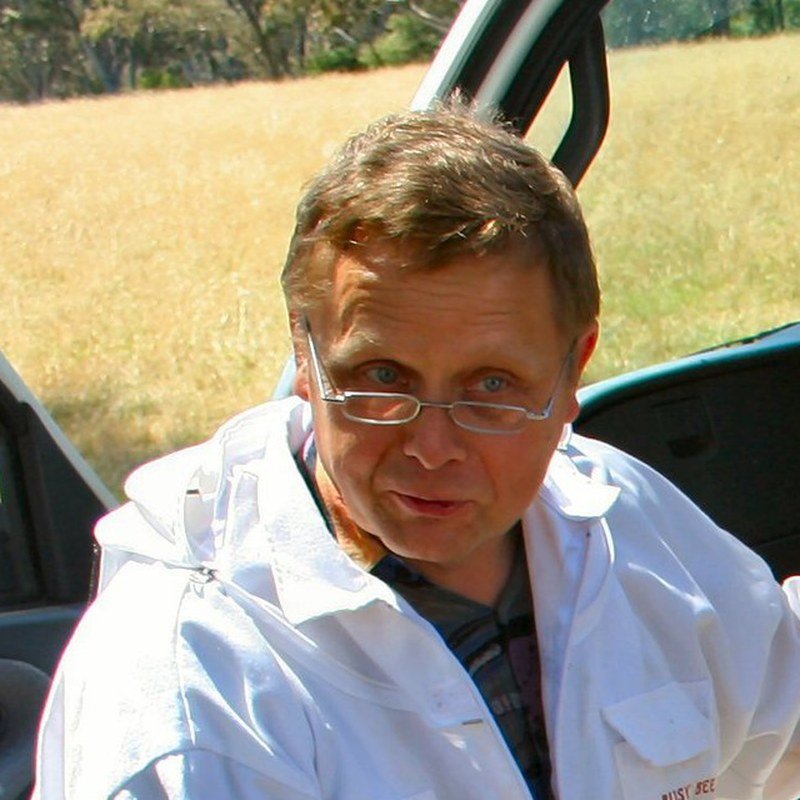
I didn’t do it alone. Years ago I met Dietmar Klimkeit of Amazing Bees. We became close friends, and I became his protégé. I taught myself the hands-on craft — the swarm catching, the rescues, the day-to-day of keeping bees alive — but Dietmar shaped how I think about bees, and that’s the part that has stayed with me most.
One thing he told me sits at the centre of everything I do. He said that for the health of bees, it’s far better to have a thousand beekeepers with two hives each than one beekeeper with two thousand. Spread out. Diverse. Cared for up close. That isn’t only good beekeeping — it’s how anything living stays strong.
Dietmar has since passed away. I keep his work going today through Amazing Bees, so the knowledge he gave so freely keeps reaching people, and the bees he passed on to me, I carry still. In a way he never really left the work. I’ve come to believe the bees are the messengers — they carry pollen between flowers, knowledge between beekeepers, and other things we don’t always have words for.
Betting on the bees
In 2020 I drew equity from my family home, bought the best hive boxes I could find, and caught my first swarm. I didn’t wait for a grant or for permission. I bet on the bees with my own future, because I believed they couldn’t wait for someone else to act.
And I kept making that bet. Over the years that followed I reinvested more than two hundred thousand dollars — most of it from my own home — back into the bees: the equipment, the sites, the colonies. Again and again. Not because it was easy, but because every time the choice came, I chose them.
I do all of this alongside a full-time career as a high-performance computing specialist for a national research agency. BeesFriend is my second full-time job — done in the evenings, the weekends, the hours other people rest.
Six years on, I look after 170 colonies across 16 locations around Melbourne. Hundreds of colonies saved. None killed. Every hive kept the way I believe bees should be kept — chemical-free, welfare first, honey taken only from fully capped frames. That isn’t a marketing standard. It’s just how I do it, because it’s right.
170
colonies
16
locations
0
killed, ever
Growing the thousand
I’m not trying to become the one beekeeper with two thousand hives. I’m trying to help create the thousand — through the bees I rescue, the honey that funds the next rescue, and the people I teach. Every person who learns to love two hives is part of something a single bad season can’t knock down.
If you’ve never really looked at a bee up close, I’d like to show you what I saw on that nature strip when I was four. Once you see it, you can’t unsee it.
You can be part of this — by taking home honey from rescued hives, by calling us instead of an exterminator, or by learning to keep bees yourself. However you come to it, you’re helping give a voice to something that can’t speak for itself.
Take honey home
Every jar funds a rescue.
Call us, not an exterminator
We relocate, never kill.
Learn to keep them
Six years of knowledge, passed on.
— Laszlo Kun, founder, BeesFriend