
From a Melbourne beekeeper
Wax moth
Wax moth turns forgotten comb into webbing and dust. But it’s an opportunist, not a killer — a strong hive deals with it on its own, and in years of keeping bees I’ve rarely had a problem. Here’s what it is, how to spot it, and how I handle it without a single chemical.
What wax moth is
Wax moth is a small grey moth that slips into a hive and lays its eggs. It’s the larvae that do the damage, not the moth: they tunnel through the comb, eating wax, old cocoons and stored pollen, and leave behind silk webbing and a trail of dark frass. Two kinds turn up here — the greater wax moth (Galleria mellonella) and the smaller lesser wax moth (Achroia grisella). Both go after the same thing: comb that isn’t being defended.
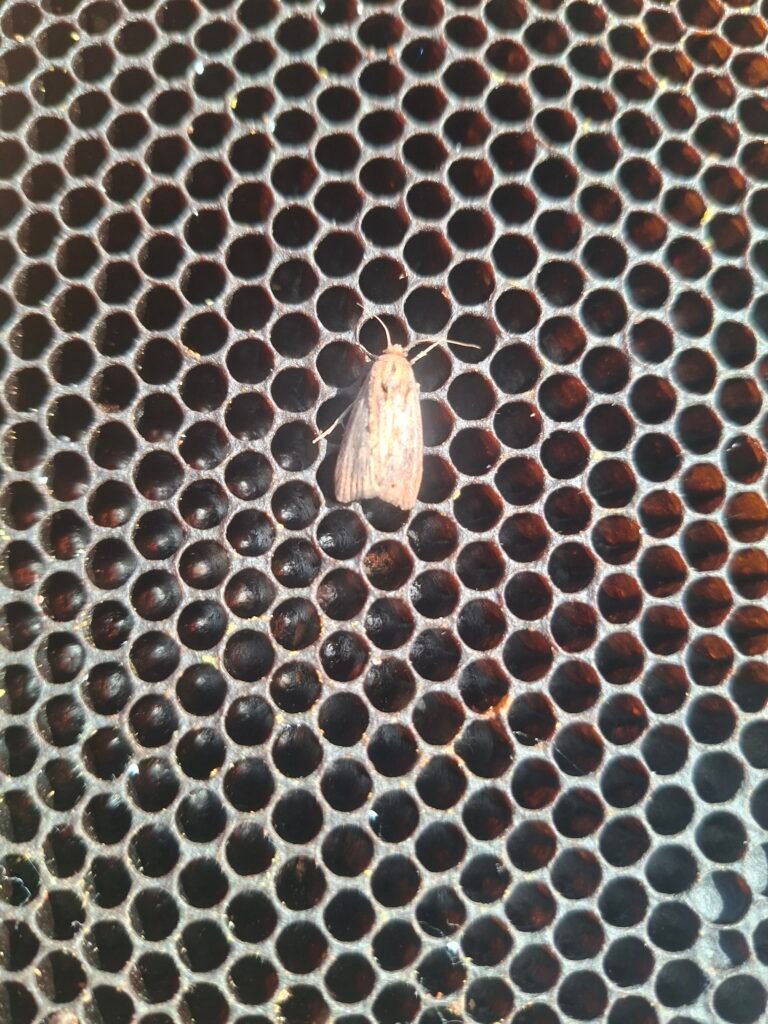
One detail worth knowing: the larvae do eat wax, but it’s used comb they really go for. What pulls them in is everything left in it — the old cocoons, larval skins, pollen and brood residue built up after generations of bees. That’s why they go hardest at old, dark brood comb and at sticky, uncleaned frames, and why a clean block of rendered wax is far less of a target. It’s not that they can’t touch pure wax; they just won’t attack it the way they’ll swarm a leftover sticky frame.
How to spot it
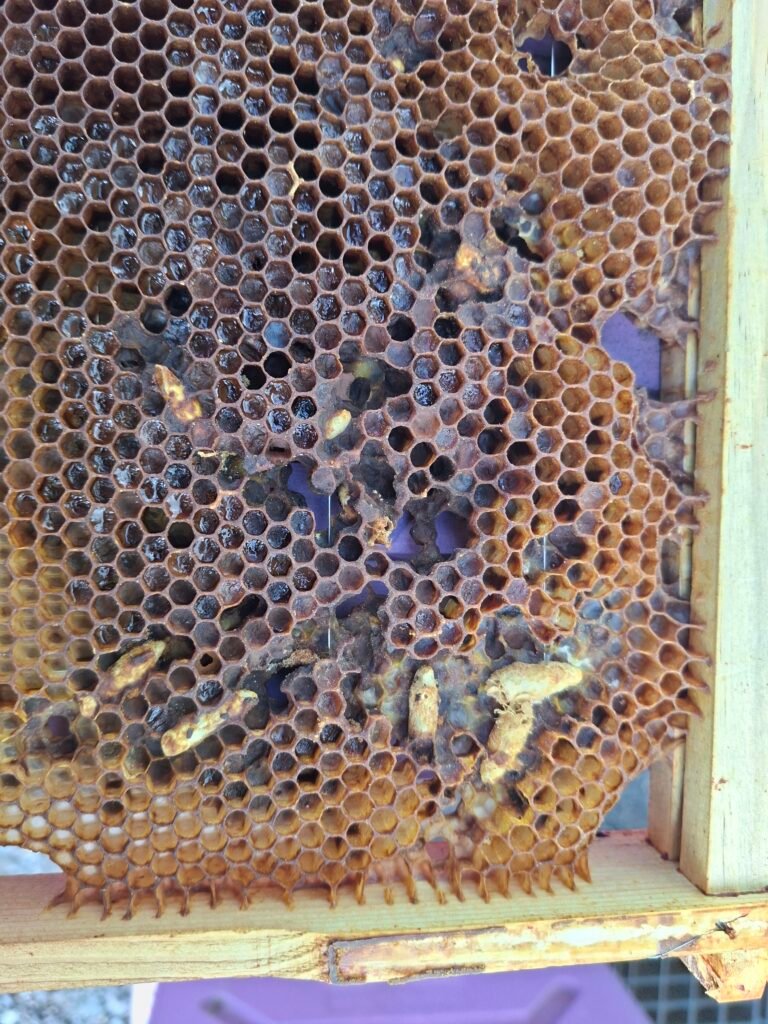
You’ll usually see the damage before you see a moth. The signs, roughly in the order they show up:
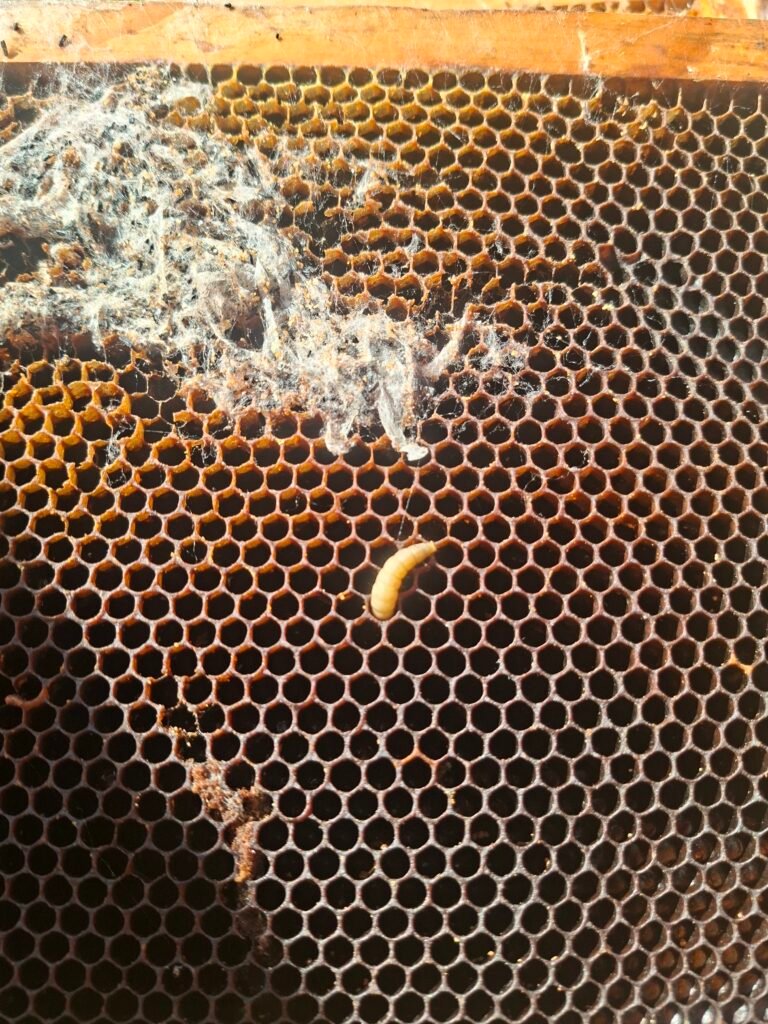
- Webbing — fine silk threads stretched across the face of the comb or between frames.
- Tunnels — channels bored through the comb, often just under the surface and lined with silk.
- Frass — dark, gritty debris and droppings, like coarse sand, collecting in the tunnels and along the hive floor.
- The larvae — pale cream caterpillars, working through the wax; the greater moth’s grow to around 25mm.
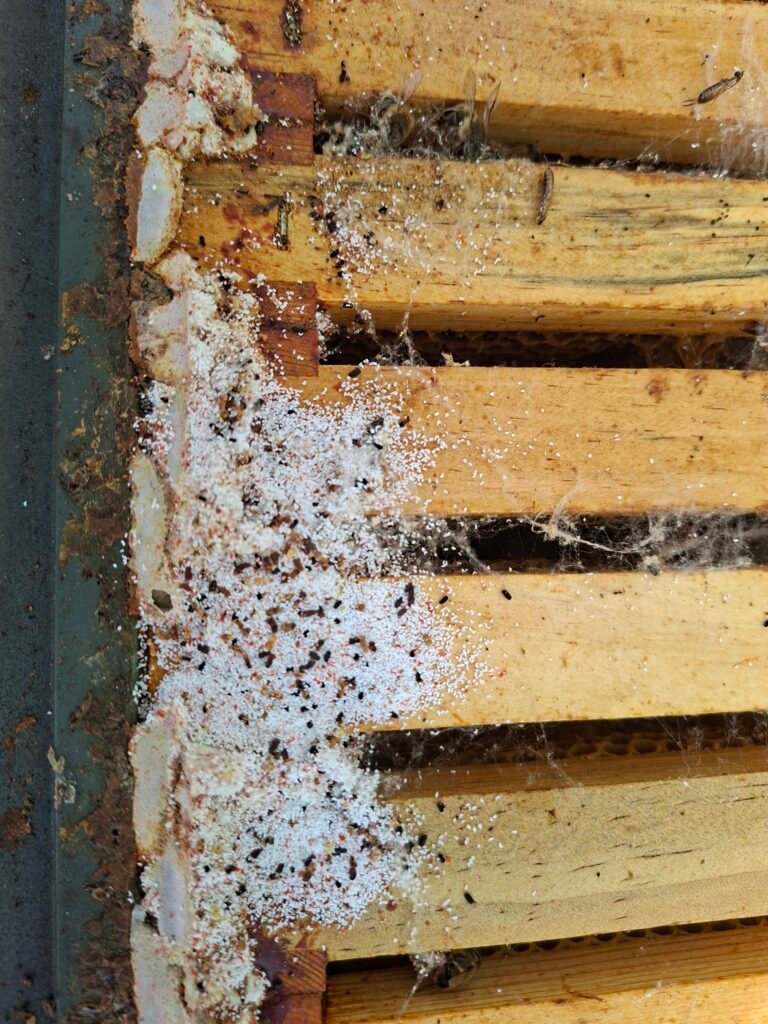
Before the webbing shows, though, there’s an earlier tell that’s easy to misread. A young larva will run under the cappings of the brood comb, lifting and opening the cells as it tunnels along — leaving a line of uncapped, chewed-open cells that looks a lot like bald brood or a brood disease. If you see a strange track of opened cappings and start worrying about something worse, check for a wax moth larva just beneath the surface first; often that’s all it is.
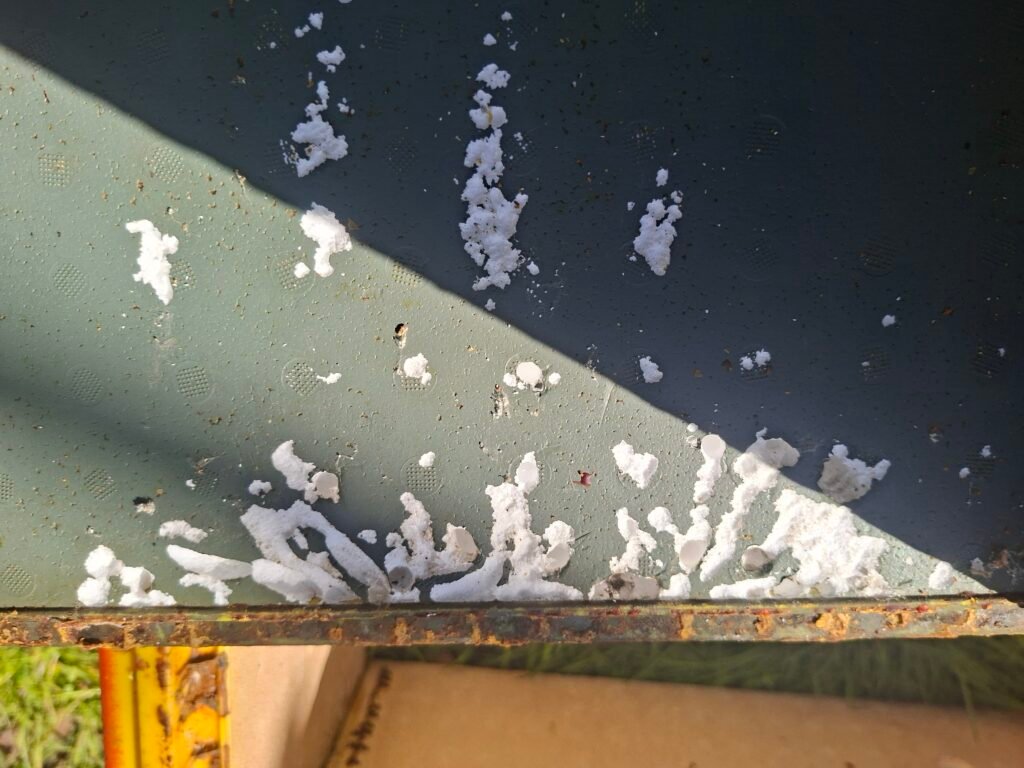
There’s also one place it hides that catches people out: the larvae don’t only eat comb, they burrow into the hive itself. They’ll bore into timber frames and boxes, and into the polystyrene of an insulated hive — often up underneath the bottom board, where you simply can’t see it. You’ll frequently find that damage only when you’re cleaning the floor of the hive, long after it started. If you run poly boxes, it’s worth a proper look at the base rather than trusting a quick glance.
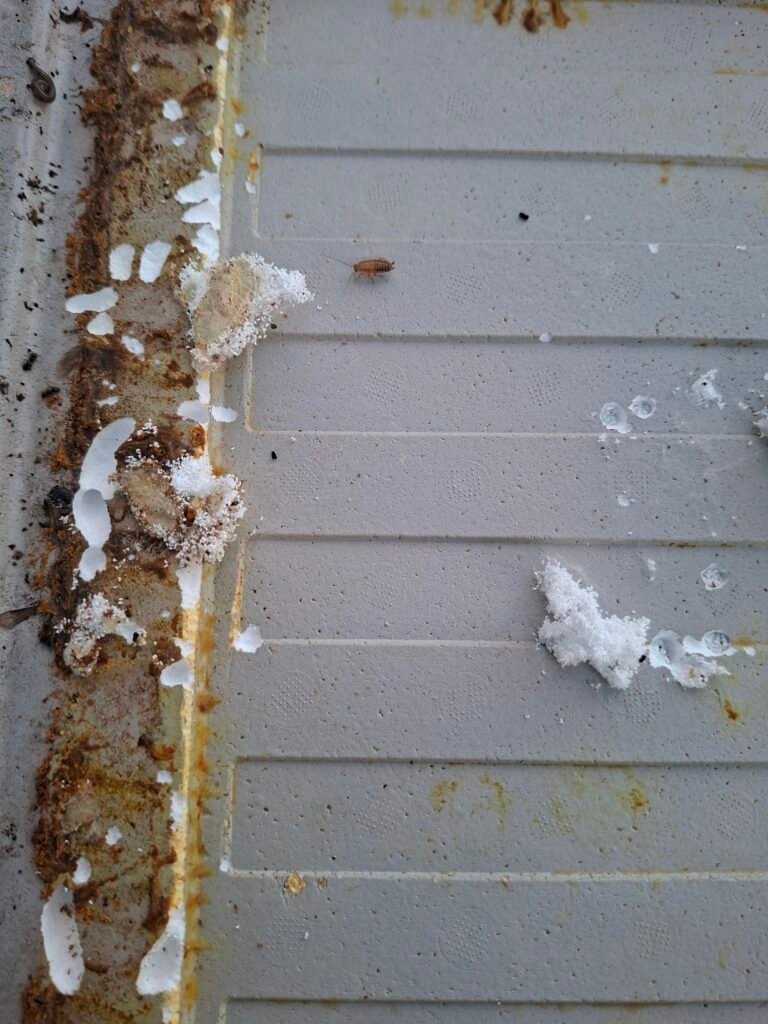
Left alone in a weak hive, it goes from a few stray threads to comb matted and ruined right across the frame, surprisingly fast.
Which hives get hit
Here’s the part most people miss: wax moth is a symptom, not usually the cause. It moves in where the bees have already thinned out — a weak or shrinking colony, a queenless hive, or comb sitting in storage with no bees on it at all. A strong colony patrols its own comb constantly and throws moth larvae out before they ever get established.
Every photo on this page comes from one hive of mine that died out over winter, which I opened up in spring. It’s a textbook case: with no bees left to defend the comb, the moth had already moved straight in.
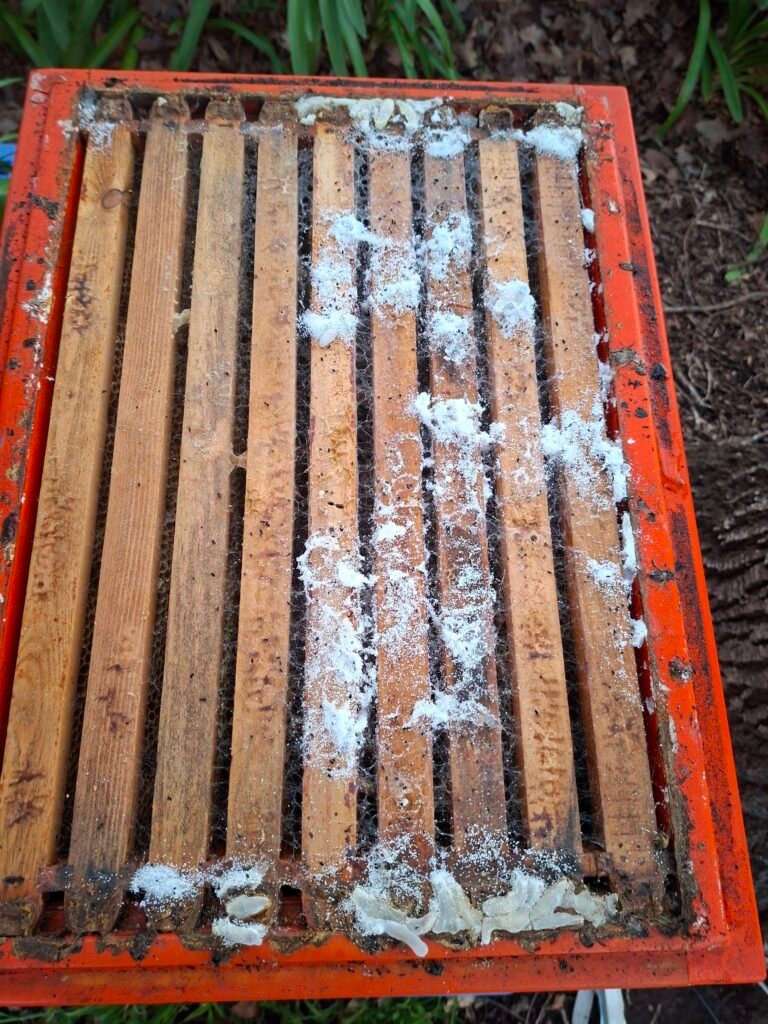
So a wax moth problem is really the hive telling you something else went wrong first. Keep colonies strong and the moth rarely gets a foothold. In practice I very rarely have an issue with it, even with both the greater and lesser moth around — the bees handle it.
How I handle it — no chemicals
My whole approach starts with strong hives, because they do most of the work themselves. Beyond that, I use no chemicals — no fumigant crystals, nothing that sits in with comb meant to hold food. Two things do the job:
- Freeze what’s worth saving. If a frame is caught early and still salvageable, 24 hours in the freezer at −15°C kills every stage — eggs, larvae and all. After that it’s clean, and safe to store or hand back to a colony.
- Render what isn’t. If the comb is too far gone, I cut it out and melt the wax down. The comb structure is finished, but the beeswax itself is still good — it goes into the same beeswax I filter at least three times for candles and blocks, and a clean rendered block is far less of a target than the sticky comb it came from.
Where larvae have bored into a timber frame or into the polystyrene of a box, freezing still kills them — but check the woodware and the base for the tunnels they leave, and repair or replace anything they’ve hollowed out. That’s the whole method. No paradichlorobenzene, no chemical fumigants — just a freezer, a strong colony, and comb that never gets left undefended for long.
Storing comb so moth can’t get in
Most wax moth damage doesn’t happen in a living hive at all — it happens to drawn comb in storage, where there are no bees to defend it. Old brood comb and sticky, uncleaned frames are the most at risk, because they’re full of the residue the larvae are drawn to; a clean block of rendered wax is far less appealing to them. The fix for comb is simple and chemical-free: keep it somewhere well-lit, with air moving through it.
Wax moth wants the opposite — dark, still, warm and closed up. Light and airflow make comb a poor target. So I don’t stack sealed boxes of comb in a dark shed; I keep it open to the light and the breeze, and freeze anything I’m unsure about before it goes away.
It has a job, in the wild
Wax moth isn’t quite the villain it looks like on a ruined frame. In the wild it’s a clean-up crew — when a colony dies out in a tree hollow, the moth clears the old comb so the cavity is fresh for the next swarm to move in. The trick is simply to make sure it only ever gets the comb you’re finished with, never the comb your bees are working.
Strong colonies, kept chemical-free, sort out the rest — the same way I manage every pest here, right through to varroa. It’s all part of the same standard: healthy bees, and nothing in the hive that shouldn’t be there. That’s the whole of it, and it’s set out in full on our raw honey standard. If you want to learn to read and manage a hive this way yourself, that’s exactly what I teach through beekeeping mentoring.
Frequently asked questions
What is wax moth?
A small grey moth whose larvae tunnel through beeswax comb, eating the wax along with the old cocoons, pollen and brood residue in it — and leaving silk webbing and dark frass behind. Two species turn up in Australia — the greater wax moth (Galleria mellonella) and the lesser wax moth (Achroia grisella).
What does wax moth damage look like?
Fine silk webbing across the comb, tunnels bored through it, gritty dark frass like coarse sand, and pale cream caterpillars working through the wax. Early on, a larva running under the cappings can lift and open brood cells in a line that looks like bald brood. The larvae also burrow into timber frames and into the polystyrene of insulated boxes — often under the bottom board, where it’s hard to see until you clean the hive floor.
Wax moth or bald brood — how do I tell?
A young wax moth larva tunnelling just under the cappings lifts and opens the cells as it goes, leaving a track of uncapped, chewed cells that mimics bald brood or a brood disease. If you find a line of opened cappings, look just beneath the surface for the larva before assuming the worst — it’s very often only wax moth. If in doubt about actual brood disease, report through your state channel such as Agriculture Victoria.
Does wax moth attack pure beeswax?
Not readily. The larvae can and do eat wax, but they’re far more drawn to used comb full of cocoons, pollen and brood residue. A clean, rendered and filtered block has little of that, so it holds up well in storage — where a sticky, uncleaned frame would be attacked quickly.
How do you get rid of wax moth without chemicals?
Keep colonies strong — a strong hive evicts moth larvae itself. For affected frames worth saving, freeze them for 24 hours at −15°C, which kills every stage. Comb that’s too far gone gets rendered down for its wax. No fumigants required.
Does wax moth kill a beehive?
Not on its own. Wax moth is an opportunist that moves into colonies already weakened, queenless, or into stored comb with no bees on it. A strong, healthy colony defends its comb and keeps the moth in check.
How do I protect stored frames from wax moth?
Store drawn comb somewhere well-lit with air moving through it — wax moth prefers dark, still, closed-up spaces. Avoid stacking sealed boxes of comb in a dark shed, and freeze any frames you’re unsure about for 24 hours at −15°C before storing.
Does wax moth damage the hive itself?
Yes — the larvae don’t only eat comb. They burrow into timber frames and boxes, and into the polystyrene of insulated hives, often underneath the bottom board where it goes unnoticed until you clean the hive floor. Freezing kills them, but check and repair any woodware or poly they’ve tunnelled into.
Greater or lesser wax moth — what’s the difference?
Both occur here. The greater wax moth is the larger of the two, with larvae up to around 25mm that cause the heavier damage; the lesser wax moth is smaller. The signs and the way I handle them are the same for both.